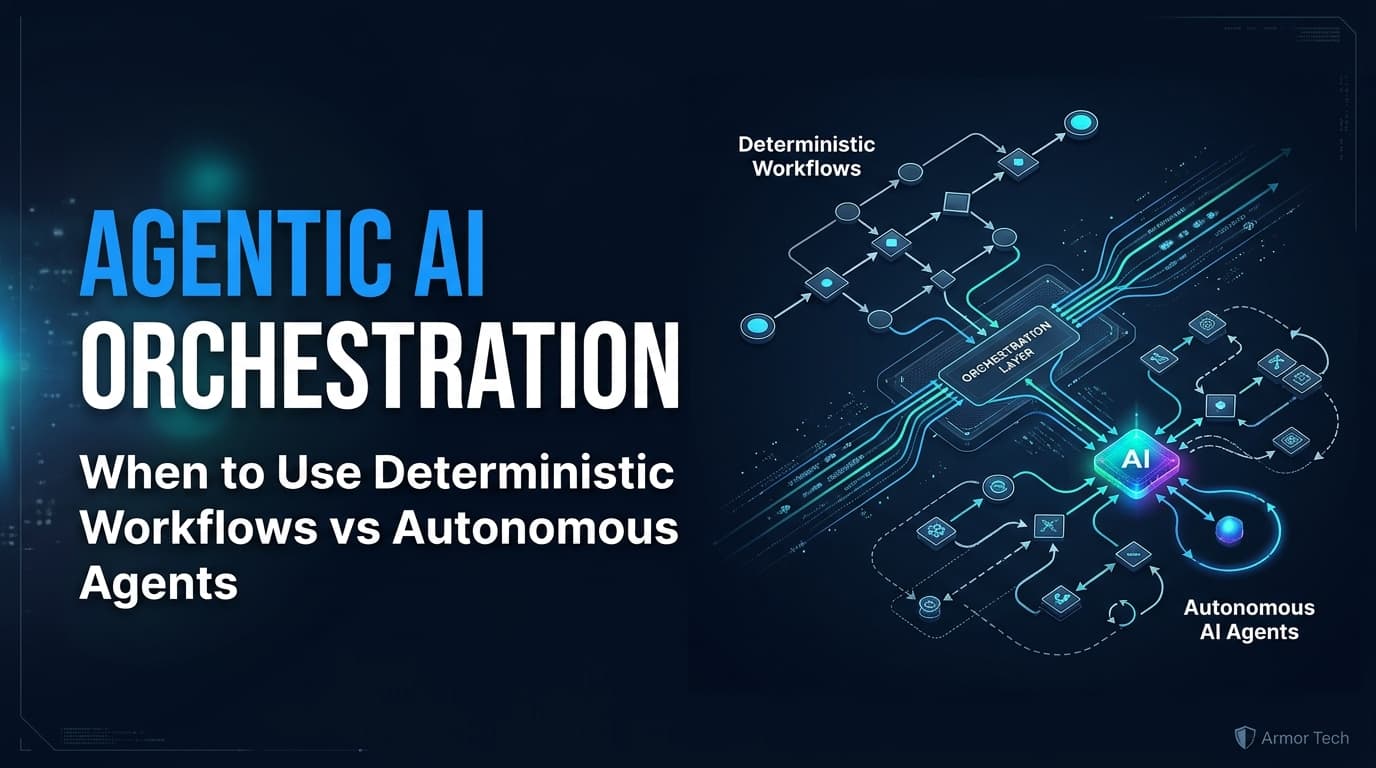
Agentic AI shifts accountability from code review to action review. An agent can decide which tool to call, how to sequence a task, and when to stop. That autonomy is useful, but it means accountability cannot depend only on post-hoc inspection of a finished run. Engineering teams need clear ownership, decision records, and human authority over consequential actions.
The practical design question is where those controls belong. The patterns matter: where a human approval gate sits, what gets logged, how overrides are recorded, and when escalation fires.
Why Agentic AI Breaks Traditional Accountability Models
Agentic AI systems move from producing a recommendation to executing a plan. That changes the failure surface. A model output can be reviewed. An agent action can alter records, send messages, trigger workflows, or call external systems. Traditional accountability models often assume a clear chain from code change to runtime behavior. Agentic systems add a moving decision layer that is harder to trace.
The governance gap is not only technical. It is organizational. Someone must own the outcome when the agent acts. That owner may be a technical lead, a compliance contact, a business operator, or a delegated approver. Without that assignment, post-incident reviews become arguments over who was responsible rather than inquiries into what the system did.
Where responsibility sits when an agent acts
Autonomy versus oversight determines the design pressure. A low-risk agent may act within a narrow scope, and the operator still retains accountability. A high-risk action may require human approval before execution. The tricky area is the middle ground: an agent that can act autonomously but with meaningful consequences. That is where traditional review-after-the-fact models are weakest.
Standard approval workflows often review outputs after the fact. In an agentic loop, the loop may complete before a human sees the evidence. The review then depends on logs that were never designed for governance. Accountability needs to be designed before the agent runs, not retrofitted after an incident.
Human-in-the-Loop as an Accountability Layer, Not a Bottleneck
Human-in-the-loop design is most defensible when the human has authority, context, and decision rights. A human approval gate is not automatically accountability. If the gate is decorative, the workflow has not solved the governance problem. The design has to answer who can approve, what they are approving, and what happens after a rejection.
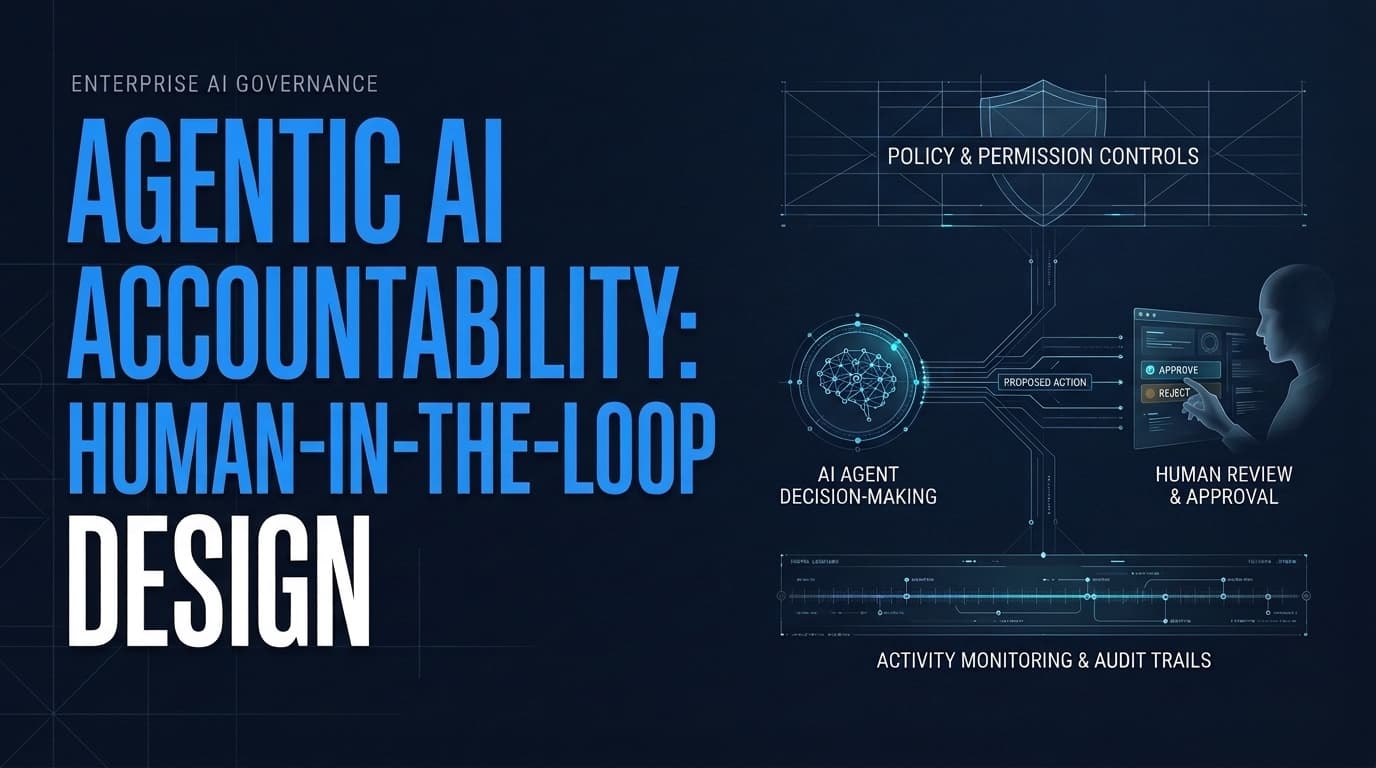
Gate placement should precede consequential execution. The agent proposes an action, records its reasoning or intended path, and presents enough context for a human to decide. The human can approve, reject, or request more information. The agent then branches. Low-risk actions may run without a gate, but the threshold should be explicit and consistent.
The real test is not whether a human is in the loop. It is whether the human can stop, reverse, or override the action without bypassing controls. Treating human input as a bottleneck often means the gate is placed late or designed for rubber-stamping. Treating it as an accountability layer means placing it where authority meets consequence.
Audit Trails and Decision Logging in Agentic Workflows
An audit trail for agentic automation should capture the decisions that led to action, not just the final output. Useful fields include trigger context, inputs, model responses, tool calls, confidence signals where available, reasoning traces if the system produces them, proposed action, and the human decision or override.
Correlation IDs help connect a run across systems. Without them, tracing an agent action to a business outcome becomes manual and error-prone. The trail should support review after the fact without requiring forensic reconstruction. Retention and review cadence also matter. A log that cannot be searched, filtered, or summarized within an agreed period does not help accountability.
Escalation and Override Patterns for n8n and Make
Visual automation builders such as n8n and Make offer patterns for branching, pausing, and routing. In practice, the accountability mechanism usually looks like conditional branching: when risk threshold, action type, or sensitivity crosses a defined line, route to a human approval step. The agent pauses or the workflow waits. If the human approves, execution continues. If rejected, the workflow branches to remediation, notification, or hold.
Escalation logic should define timeout behavior. If a human does not respond, the workflow should not silently continue or drop the action. It should route to an accountable fallback, queue, or owner. Override paths should be available to authorized roles, and overrides should be logged as decisions rather than treated as exceptions.
Role-Based Access and Approval Thresholds
Segregation of duties is central in agentic systems. The person who requests an action may not be the person who approves it. The operator may not be the approver. The agent may execute, but human authority should remain distinct where it matters.
Thresholds can be based on action type, data sensitivity, financial impact, customer harm potential, or compliance exposure. Not every approval needs a human. The point is that thresholds are explicit, documented, and enforced by workflow logic. Approval requirements should be auditable, and bypass conditions should be rare and controlled.
From Template to Production: Armor Tech’s Accountability Framework
Turning an accountable agentic workflow from a template into production requires structure. The team needs to map capabilities to roles, define escalation paths, and decide which actions remain autonomous. The AI automation workflows and n8n/Make service perspective is useful here because implementation patterns must survive real system boundaries.
Integration with retrieval, voice agents, and SaaS platforms adds context. A voice agent handling a request may need tighter approval logic than a background data-processing agent. The same governance principles apply, but the operational details differ. Moving from template to governed production workflow means turning patterns into owned, testable controls.
Pre-Deployment Governance Checklist
Assign an accountability owner for each autonomous agent workflow.
Verify that audit trail fields cover inputs, outputs, decisions, and overrides.
Validate human-in-the-loop gates against risk thresholds.
Confirm escalation and timeout behavior.
Check role-based approval permissions.
Run a controlled pilot before broader automation.
How Armor Tech Can Help
Armor Tech can help organizations build accountable agentic AI systems by integrating human-in-the-loop mechanisms into AI workflows, decision processes, and automated business operations. This includes designing approval checkpoints for sensitive actions, defining escalation rules, implementing role-based permissions, and ensuring that authorized employees can review or reject AI-generated decisions when necessary. Armor Tech can also develop monitoring systems and audit trails that record agent activities, tool usage, approvals, and important decision outcomes. For workflows involving financial transactions, customer information, business-critical operations, or sensitive data, additional validation and human authorization controls can help reduce operational risks. By combining intelligent automation with transparent oversight, clear responsibility boundaries, and continuous monitoring, Armor Tech helps businesses deploy AI agents that remain efficient while supporting accountability, trust, and responsible human control.
Frequently Asked Questions
Do all agentic actions need a human approval gate?
No. Low-risk actions may remain autonomous, while consequential actions require approval. The key is an explicit risk-based policy rather than treating every action as equally sensitive.
What should an audit trail capture in an agentic workflow?
It should capture the trigger, inputs, outputs, tool calls, reasoning where available, proposed action, human decision, and override information. Correlation IDs help tie the sequence together.
How should timeouts and overrides be handled?
Escalation should route to an accountable fallback when a human does not respond. Overrides should be authorized and logged, with the decision clearly recorded.
Design the Gate Before the Agent
The practical move is to design the accountability gate before the agent handles real work. That means defining what the system may do, who may approve it, what gets logged, and how it escalates. The technology changes quickly, but the governance pattern is still about ownership, traceability, and override authority.