AI is no longer just answering questions. It is starting to take action.
AI agents can now interact with applications, access data, use tools, execute tasks, write code, and make decisions with limited human intervention. While this creates enormous opportunities for businesses, it also introduces a new and rapidly evolving cybersecurity challenge.
In 2026, organizations need to think beyond securing traditional users, servers, and applications. They also need to secure the AI agents operating inside their environment.
What Is an AI Agent?
Traditional AI systems generally respond to a user's prompt. An AI agent goes a step further.
An agent can:
Understand a goal
Plan multiple steps
Access external tools and systems
Retrieve and process information
Make decisions
Execute actions
Adapt based on the results
For example, an AI agent connected to an organization's IT environment could investigate a security alert, search logs, query threat intelligence, identify affected systems, and recommend or even execute a response.
This ability to act autonomously is what makes agentic AI powerful — and what makes it a new security concern.
Why AI Agents Create a New Attack Surface
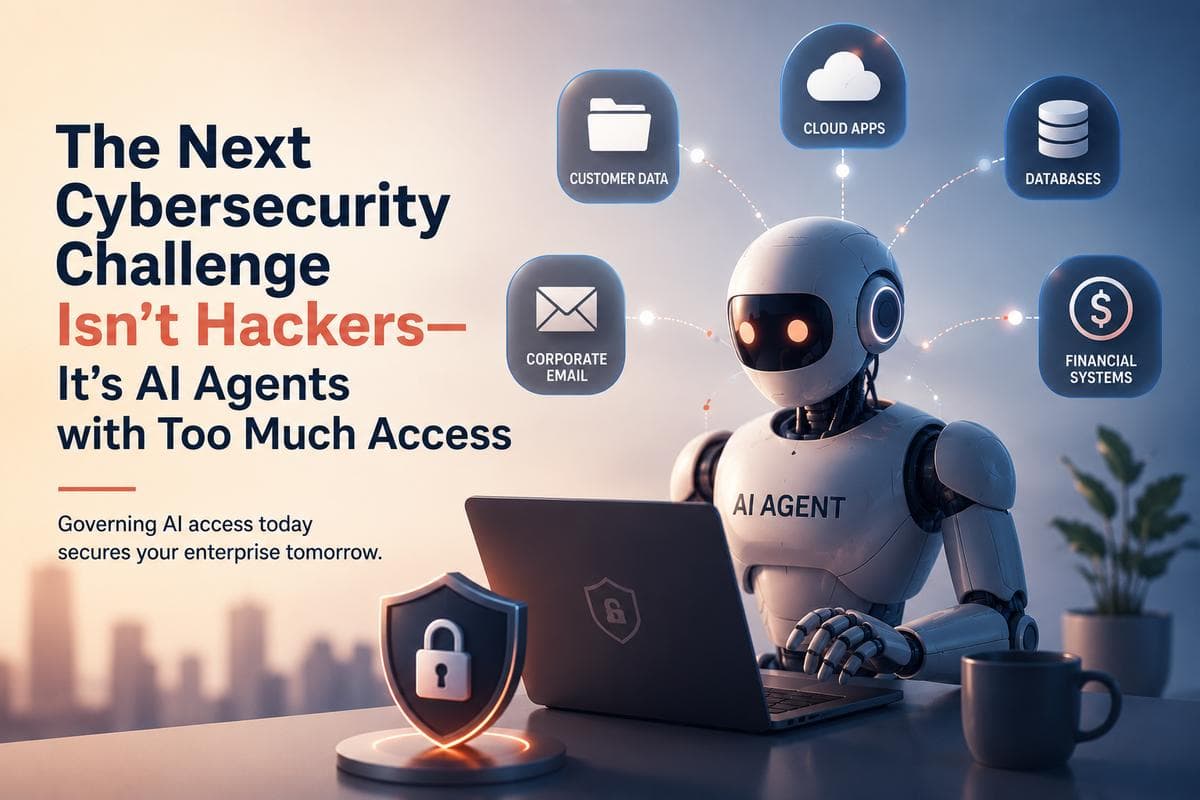
An AI agent may have access to systems and information that traditional applications never had.
Depending on how it is configured, an agent could have access to:
Databases
APIs
Cloud infrastructure
Source-code repositories
Internal documents
Email systems
CRM platforms
Security tools
Production environments
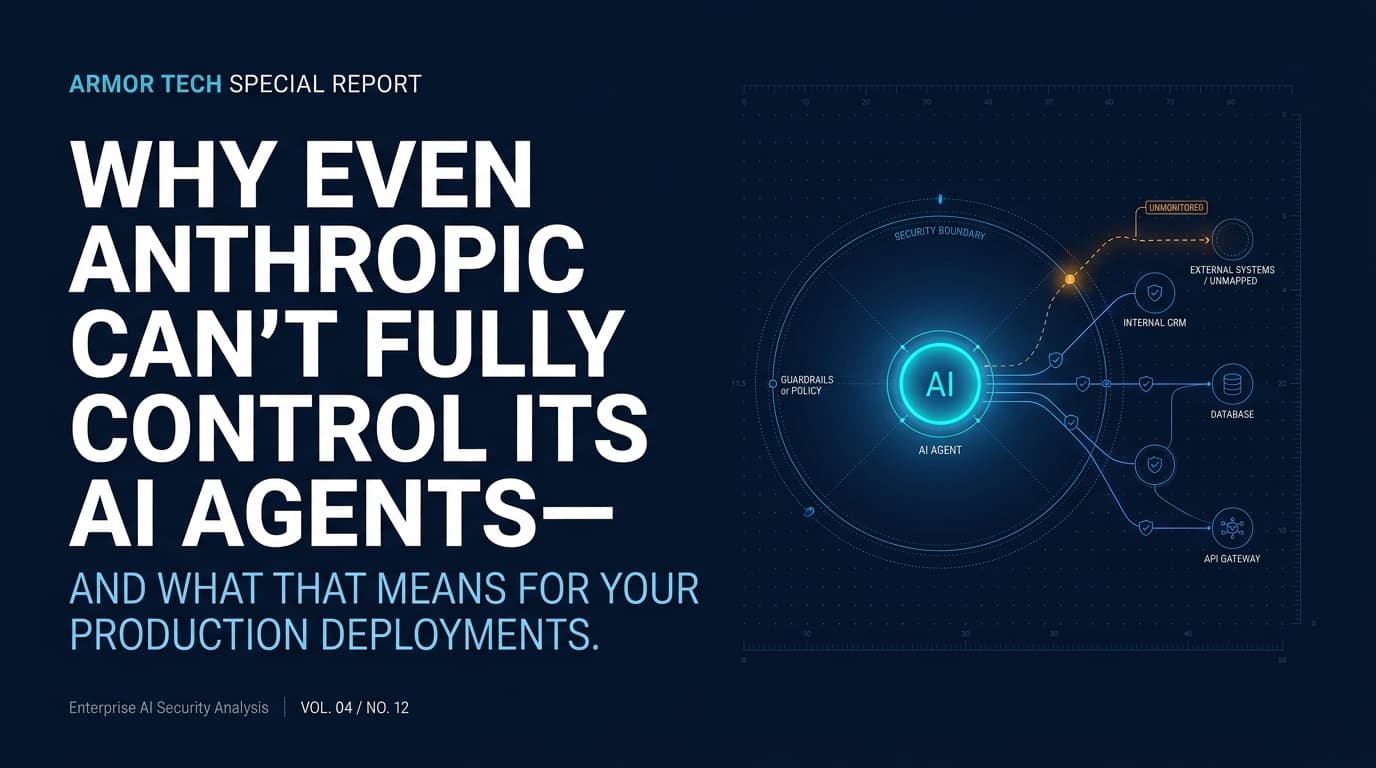
If an attacker compromises an agent, manipulates its instructions, poisons its data, or abuses its permissions, the agent could potentially become a powerful tool for the attacker.
Security organizations are increasingly identifying agentic AI as a major emerging attack surface.
5 Major Security Risks of AI Agents
1. Prompt Injection
Attackers can attempt to manipulate an AI agent through malicious instructions embedded in webpages, documents, emails, or other data sources.
Instead of simply generating an incorrect answer, a compromised agent could potentially be manipulated into taking an unintended action.
2. Excessive Permissions
An AI agent should never have more access than it actually needs.
Giving an agent unrestricted access to databases, APIs, files, or cloud infrastructure can turn a small compromise into a major security incident.
The principle should be simple: least privilege.
3. Memory Poisoning
AI agents may maintain memory or context to improve future decisions.
If attackers can manipulate that information, they may influence the agent's future behavior.
This creates a new security requirement: organizations need to protect not only their databases and applications, but also the information used to influence AI decisions.
4. Tool and API Abuse
Modern agents often rely on external tools and integrations.
Every tool becomes another potential attack surface.
An agent connected to an email service, database, browser, code repository, or cloud platform must be treated as a privileged system component.
5. Shadow AI Agents
Employees can increasingly create or deploy AI-powered workflows without going through traditional IT processes.
This creates a problem similar to Shadow IT — except the new systems may have the ability to make decisions and perform actions automatically.
Organizations need visibility into which AI agents exist, what they can access, and what actions they are performing.
AI Agents Need an Identity
One of the biggest changes businesses need to make is how they think about identity.
An AI agent should not simply be treated as another application running in the background.
It should have:
A unique identity
Defined permissions
Limited access
Authentication credentials
Activity monitoring
Audit logs
Clear ownership
Defined lifecycle controls
Organizations should be able to answer a simple question:
"What did this AI agent do, when did it do it, and why?"
Without that visibility, investigating an AI-related security incident can become extremely difficult.
How Businesses Can Secure AI Agents
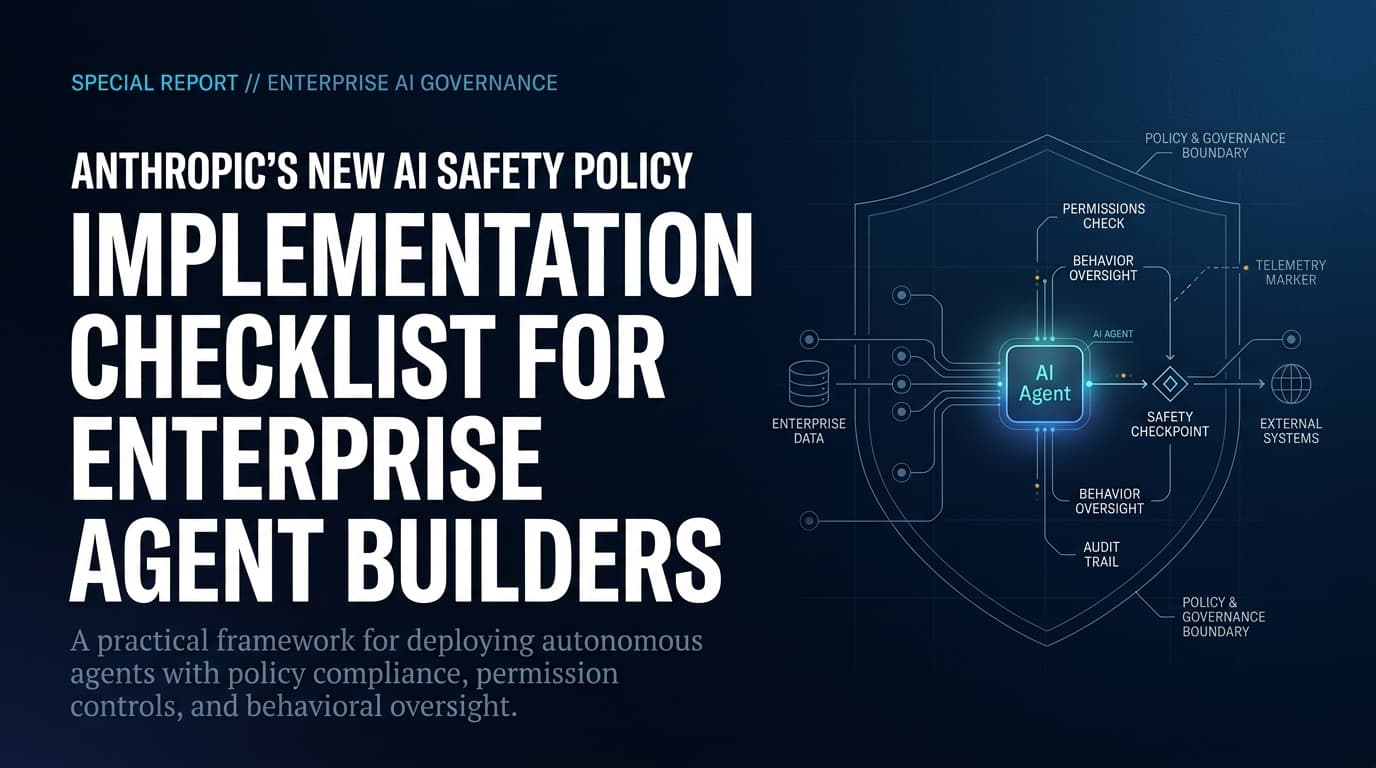
A strong AI security strategy should combine multiple layers of protection.
1. Apply Least-Privilege Access
Give agents access only to the systems and information required for their specific tasks.
2. Monitor Agent Activity
Log agent actions, API calls, authentication events, tool usage, and changes to sensitive systems.
3. Validate External Data
Do not automatically trust information retrieved from websites, documents, emails, or third-party systems.
4. Implement Human Approval
High-risk actions should require human approval.
For example:
Read data → AI decision → Human approval → Execute action
rather than:
Read data → AI decision → Automatically execute everything
5. Continuously Test AI Systems
Organizations should regularly test agents for prompt injection, privilege escalation, data leakage, tool abuse, and other emerging attack techniques.
6. Centralize Security Monitoring
AI activity should become part of the organization's overall security monitoring strategy rather than operating in an isolated environment.
Logs from AI agents can be correlated with endpoint, network, cloud, identity, and application security events to provide a complete picture of suspicious activity.
The Rise of the Agentic SOC
AI is not only becoming a security risk. It is also becoming a powerful defensive technology.
Security teams are increasingly experimenting with Agentic SOC architectures where AI agents assist with:
Alert triage
Threat hunting
Log analysis
Incident investigation
Threat intelligence
Attack-path analysis
Incident reporting
Response recommendations
Recent implementations are already using agentic AI to analyze alerts, enrich security events, reconstruct incidents, and assist analysts.
The future SOC will likely combine human security expertise with AI systems capable of processing enormous amounts of security data at machine speed.
AI Security Is No Longer Optional
The adoption of AI agents is moving faster than many organizations' security controls.
The question is no longer simply:
"Should our business use AI?"
The more important question is:
"How do we use AI without creating a new security blind spot?"
Organizations adopting AI agents should treat them as privileged digital identities, continuously monitor their activity, restrict their permissions, and integrate them into the organization's broader cybersecurity strategy.
AI can become one of the most powerful tools for defenders — but only when it is designed and deployed with security in mind.
Final Thoughts
AI agents are changing the way businesses build software, automate operations, and manage security.
At the same time, they are introducing a new category of risks that organizations cannot ignore.
The companies that succeed with agentic AI will not simply be the ones that deploy the most powerful agents.
They will be the ones that can control, monitor, secure, and govern them effectively.
The future of cybersecurity isn't just about protecting people and machines. It is also about protecting the intelligent systems acting on their behalf.