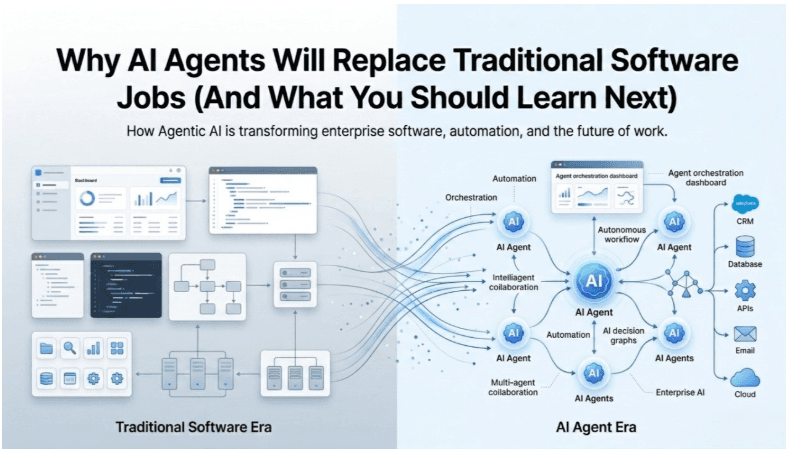
For decades, software development has relied on teams of engineers working through every stage of the development lifecycle from writing code and fixing bugs to testing, documentation, and deployment. Today, that model is beginning to change. A new generation of AI agents is moving beyond simple code generation to autonomously plan tasks, interact with development tools, and complete complex software workflows with remarkable efficiency. Rather than replacing software engineers, these systems are reshaping how modern engineering teams operate and redefining the skills that will matter most in the years ahead.
What Are AI Agents?
Traditional coding assistants are designed to respond to individual prompts, but AI agents operate with a much broader level of autonomy. Once given a goal, they can plan the steps required to achieve it, use development tools, write and refine code, troubleshoot issues, and adapt their approach based on intermediate results.
For example, instead of simply generating a login page, an AI agent can build the supporting backend services, connect databases, execute tests, resolve bugs, update documentation, and prepare the application for deployment all as part of a connected workflow. This capability transforms AI from a code-generation tool into an active participant in the software development lifecycle, allowing engineers to spend less time on repetitive implementation and more time on architecture, innovation, and strategic problem-solving(Source:mygreatlearningdocs).
Why Traditional Software Jobs Are Changing
For decades, software engineering has involved far more than writing code. Developers have spent a significant portion of their time debugging, testing, reviewing code, updating documentation, and maintaining existing applications. While these tasks are essential, they are often repetitive and time-consuming.
AI agents are changing this dynamic by taking over many of these routine responsibilities. They can write and refine code, identify bugs, generate tests, review pull requests, and automate development workflows with minimal supervision. Rather than replacing software engineers, they enable teams to spend less time on repetitive work and more time on innovation, system design, and solving complex business challenges. As AI adoption accelerates, software development is evolving from manual execution to intelligent collaboration between developers and AI agents(Source:mygreatlearningdocs).
Which Software Jobs Are Most Likely to Change?
AI is unlikely to affect every software role in the same way. Positions that rely heavily on repetitive, rule-based tasks are expected to experience the biggest transformation, while roles requiring strategic thinking, system design, and business decision-making will continue to depend on human expertise(Source:mygreatlearningdocs).
1. Junior Software Developers
Junior developers often begin their careers by working on routine development tasks such as fixing bugs, building standard features, and implementing predefined requirements. As AI agents become more capable, much of this work can be completed faster through intelligent automation. This doesn't eliminate the need for junior engineers, but it does raise expectations. Future developers will need to understand system architecture, validate AI-generated code, and contribute to solving real business problems rather than focusing only on implementation.
2. Manual QA Engineers
Software testing is becoming increasingly automated with the help of AI agents. They can generate test cases, execute repetitive testing workflows, identify potential defects, and support regression testing with minimal human intervention. Human testers will remain essential for exploratory testing, usability, and quality assurance, but routine validation tasks are steadily shifting toward AI-driven automation.
3. Support and Maintenance Engineers
Maintaining existing applications often involves diagnosing recurring issues, monitoring system performance, and applying repetitive fixes. AI agents can assist by analyzing logs, identifying patterns, suggesting solutions, and even generating code updates, allowing engineering teams to resolve issues more efficiently and focus on higher-priority work.
4. Technical Documentation Specialists
Creating technical documentation has traditionally been a time-intensive process. Today, AI can generate API references, user guides, release notes, and code explanations in a fraction of the time. As a result, documentation specialists are increasingly moving from content creation to content review, refinement, and ensuring technical accuracy.
AI Agents vs AI Assistants: What's the Difference?
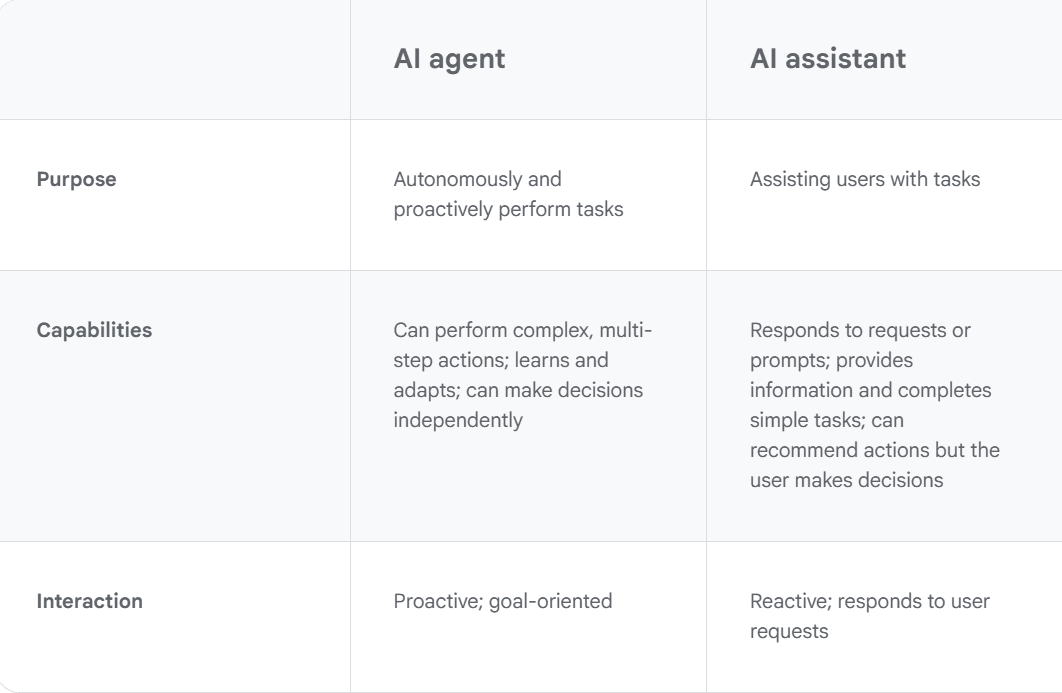
Although the terms AI agents and AI assistants are often used interchangeably, they serve different purposes. AI assistants are designed to work directly with users, responding to natural language requests and helping complete specific tasks. They can answer questions, generate content, summarize information, or suggest actions, but they typically rely on continuous user guidance before taking the next step.
AI agents, on the other hand, are built to operate with a greater level of autonomy. Once given a goal, they can plan a sequence of actions, interact with external tools, make decisions, and execute multi-step workflows with minimal supervision. Instead of waiting for instructions after every task, AI agents can work toward achieving an objective while keeping humans involved for oversight and final approval when needed(Source:Google Cloud Docs).
Conclusion
AI agents are not redefining software engineering by replacing developers.They are transforming how software is built. As these systems become more capable of handling coding, testing, debugging, documentation, and other repetitive tasks, the role of software engineers is shifting toward problem-solving, system design, and AI collaboration. The developers who embrace this change and invest in skills such as AI agents, RAG, Model Context Protocol (MCP), agent orchestration, and AI-powered development will be better positioned for the future. In the years ahead, success will depend not on competing with AI, but on learning how to work alongside it to build smarter, faster, and more innovative software solutions.
How Armor Tech Can Help
As AI agents become an integral part of modern software development, organizations need more than just access to advanced AI models.They need the right strategy to implement them effectively. At Armor Tech, we help businesses design and deploy intelligent AI solutions that automate software workflows, enhance developer productivity, and streamline enterprise operations. From custom AI agents and RAG-powered knowledge systems to Model Context Protocol (MCP) integrations and workflow automation, our team builds secure, scalable, and production-ready solutions that help organizations accelerate innovation while staying ahead in the rapidly evolving AI landscape.
References
1.Mygreatlearningdocs
https://www.mygreatlearning.com/blog/ai-agents-replace-traditional-software-jobs/
2.GoogleCloudDocs
https://cloud.google.com/discover/what-are-ai-agents