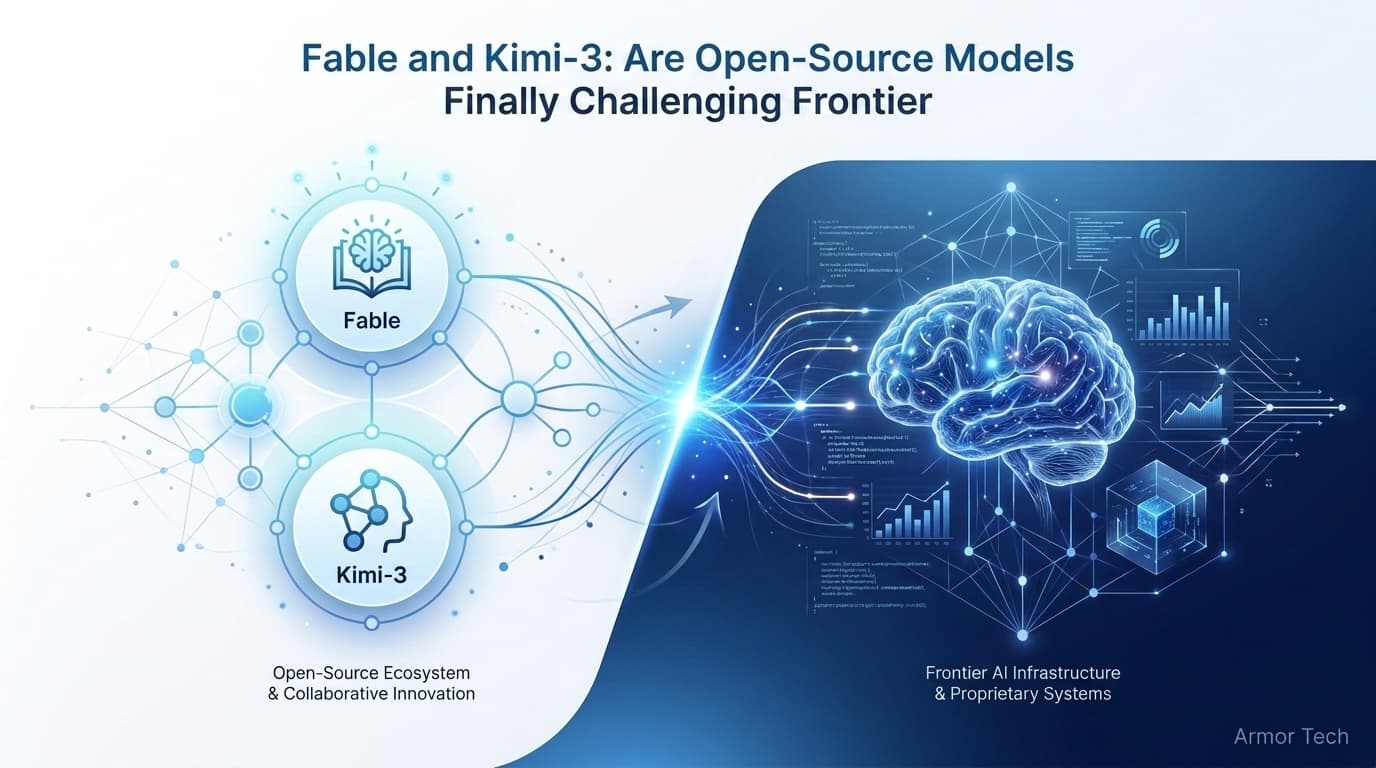
For years, the artificial intelligence landscape has been defined by a small group of frontier models developed behind closed doors. Organizations looking for state-of-the-art capabilities often had to choose between performance, cost, and control. However, 2026 is beginning to tell a different story. With the emergence of open-source models like Fable and Kimi-3, the conversation is shifting from "Can open models keep up?" to "How close are they to leading the next wave of AI innovation?" These models are not only pushing the boundaries of reasoning, coding, and agentic capabilities, but also redefining what developers, startups, and enterprises can expect from open-source AI.
The Shift in Open-Source AI
Not long ago, open-source AI models were largely viewed as alternatives useful for experimentation, but rarely considered a serious option for production-grade applications. That perception has changed dramatically over the past few years. From early community-driven efforts to highly capable models designed for reasoning, coding, and large-scale deployment, the open-source ecosystem has evolved at an unprecedented pace.
Today, the gap between open and frontier models is narrower than ever. Developers are no longer asking whether open-source AI is viable; they are evaluating which model best fits their needs. This shift is being driven by a growing demand for transparency, lower operating costs, and greater control over AI systems. Models like Fable and Kimi-3 represent the latest chapter in this evolution one where open innovation is no longer following the industry leaders, but increasingly shaping the direction of the industry itself
Introducing Kimi K3
Kimi K3 is an advanced large language model developed by Moonshot AI, one of China's leading AI startups. Recognized as one of the largest open-weight models available today, it combines massive scale with an extensive context window, enabling it to process and retain substantial amounts of information across complex tasks (Source:Kimi Documentation).
Kimi K3's Coding Capabilities
Kimi K3 demonstrates impressive capabilities in software engineering, particularly when working on complex, long-duration development tasks. It is designed to handle large codebases, support extended coding workflows, and effectively utilize external tools with minimal intervention.
Beyond traditional coding, the model is also capable of combining software development with visual understanding. This enables it to assist with areas such as frontend development, game design, and CAD-related workflows. Early demonstrations suggest that these capabilities can support more open-ended applications, ranging from software creation to research-oriented projects(Source:Kimi Documentation).
Open-Source Models Agentic Capabilities
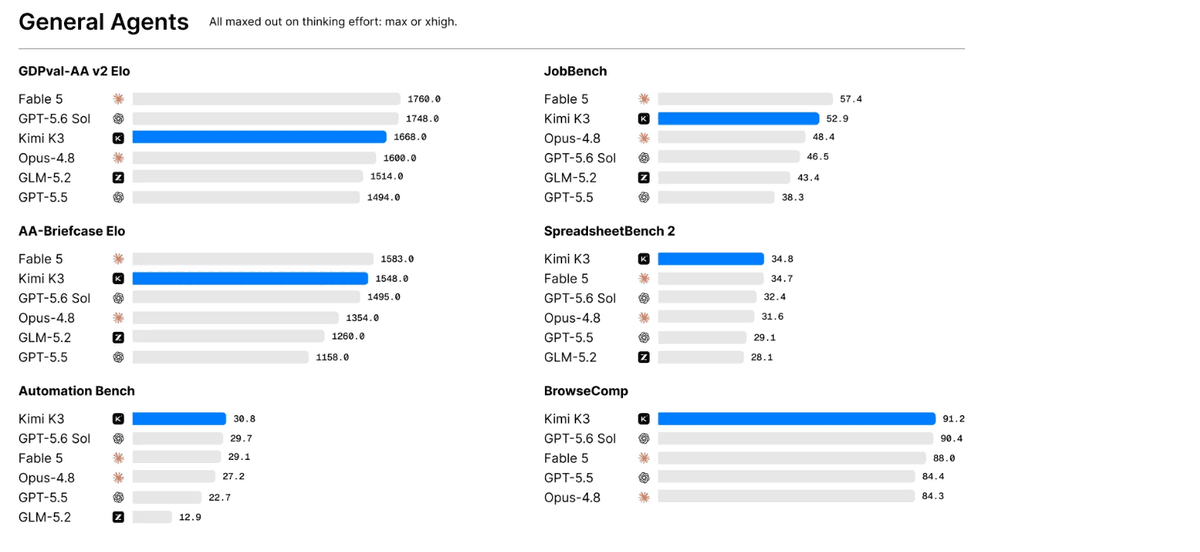
Introducing Fable 5
Claude Fable 5 is a next-generation AI model from Anthropic's Claude 5 series, designed to tackle complex problems with a high degree of autonomy. Combining strong reasoning abilities with advanced software engineering capabilities, the model is built to manage sophisticated, multi-step workflows and support a wide range of real-world applications.
Fable 5's Coding Capabilities
Claude Fable 5 is designed to support demanding software engineering tasks, from large-scale code migrations to intricate implementations that span extended development cycles. The model is capable of validating its own output through automated testing and can accurately translate design concepts into functional implementations.
In addition, its ability to interpret visual inputs allows it to compare results against intended objectives, making it a valuable tool for developers working on complex and detail-oriented projects(Source:Anthropic Documentation).
Open-Source Models Coding Capabilities
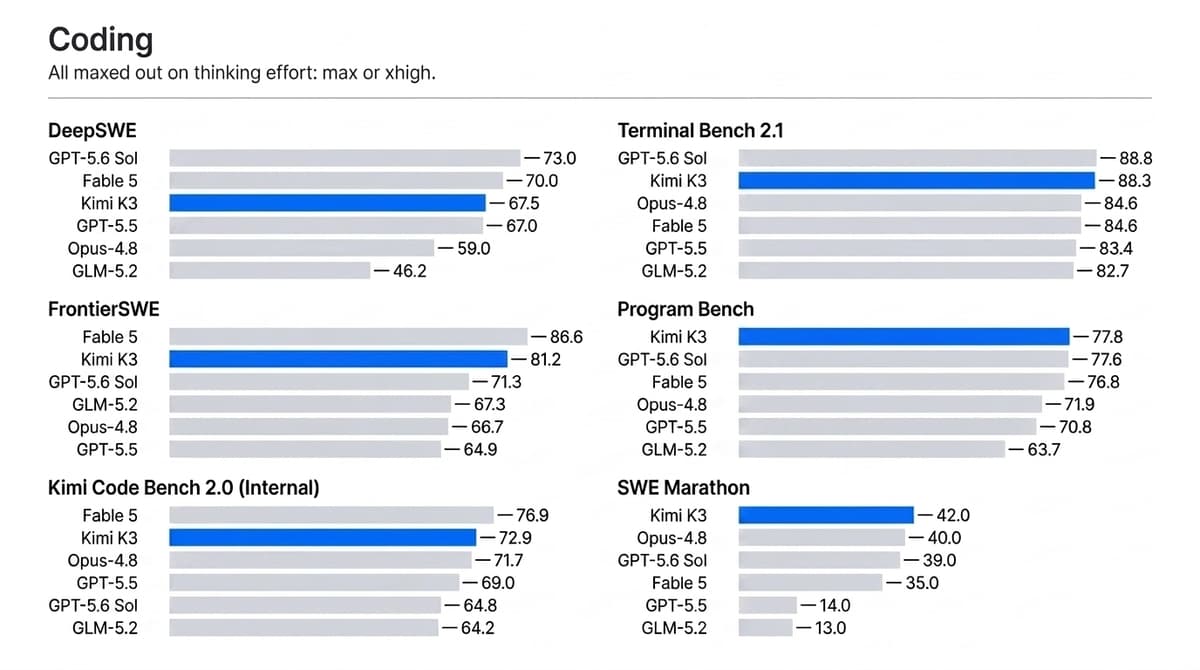
Final Thoughts
The rise of Fable 5 and Kimi K3 highlights a broader shift taking place across the AI industry. Open models are no longer limited to experimentation or niche use cases they are steadily becoming viable alternatives for organizations seeking performance, flexibility, and greater control over their AI infrastructure.
While frontier models will continue to play an important role, the momentum behind open-source AI is difficult to ignore. If recent developments are any indication, the future of AI is unlikely to be defined by a single company or ecosystem, but by a growing community of innovators pushing the boundaries of what open models can achieve.
How Armor Tech Can Help
As open-source AI continues to evolve, organizations need more than access to powerful models they need the expertise to deploy them effectively. At Armor Tech, we help businesses evaluate, implement, and integrate advanced AI solutions tailored to their specific needs. Whether it's building AI-powered workflows, developing intelligent assistants, or enabling secure, scalable deployments of models like Fable 5 and Kimi K3, our goal is to help organizations turn AI innovation into measurable business value.
References
Kimi K3 Tech Blog.Kimi Documentation
https://www.kimi.com/blog/kimi-k3#an-open-3t-class-model
Claude Fable.Anthropic Documentation
https://www.anthropic.com/claude/fable