Finding real return on investment in artificial intelligence requires more than just deploying the latest models; it requires a clear-eyed look at where your organization loses time and capital. By mapping specific business process gaps to targeted AI agent use cases, technical leaders can move from speculative experimentation to measurable operational gains. This post outlines a diagnostic framework for identifying those gaps and aligning them with agentic solutions that deliver concrete, scalable ROI.
Defining Organizational Process Gaps
Organizational gaps are the friction points in daily operations that prevent resources from flowing efficiently. In many mid-sized to large enterprises, these gaps manifest as structural inefficiencies that compound over time.
Manual handoffs between systems: When data has to be copied or exported from one platform to another, it introduces latency and human error. For example, a sales order entered into a CRM must often be re-keyed into an ERP or accounting system. This manual step creates a bottleneck, especially during peak periods.
Data fragmentation across departments: When marketing, sales, and finance operate on isolated spreadsheets or disconnected SaaS tools, aligning on key metrics becomes a chore. Teams spend hours reconciling conflicting numbers instead of making decisions based on real-time data.
Inconsistent or undocumented procedures: If institutional knowledge lives only in the heads of senior employees, onboarding new staff or handling unexpected edge cases becomes highly unreliable. Standard operating procedures (SOPs) that are outdated or vague lead to inconsistent customer experiences and compliance gaps.
Limited real-time visibility into workflow performance: Without granular tracking of task durations, queue lengths, and error rates, leaders are essentially flying blind, relying on lagging indicators rather than leading metrics to guide operational improvements.
Linking Gaps to Agentic AI Use Cases
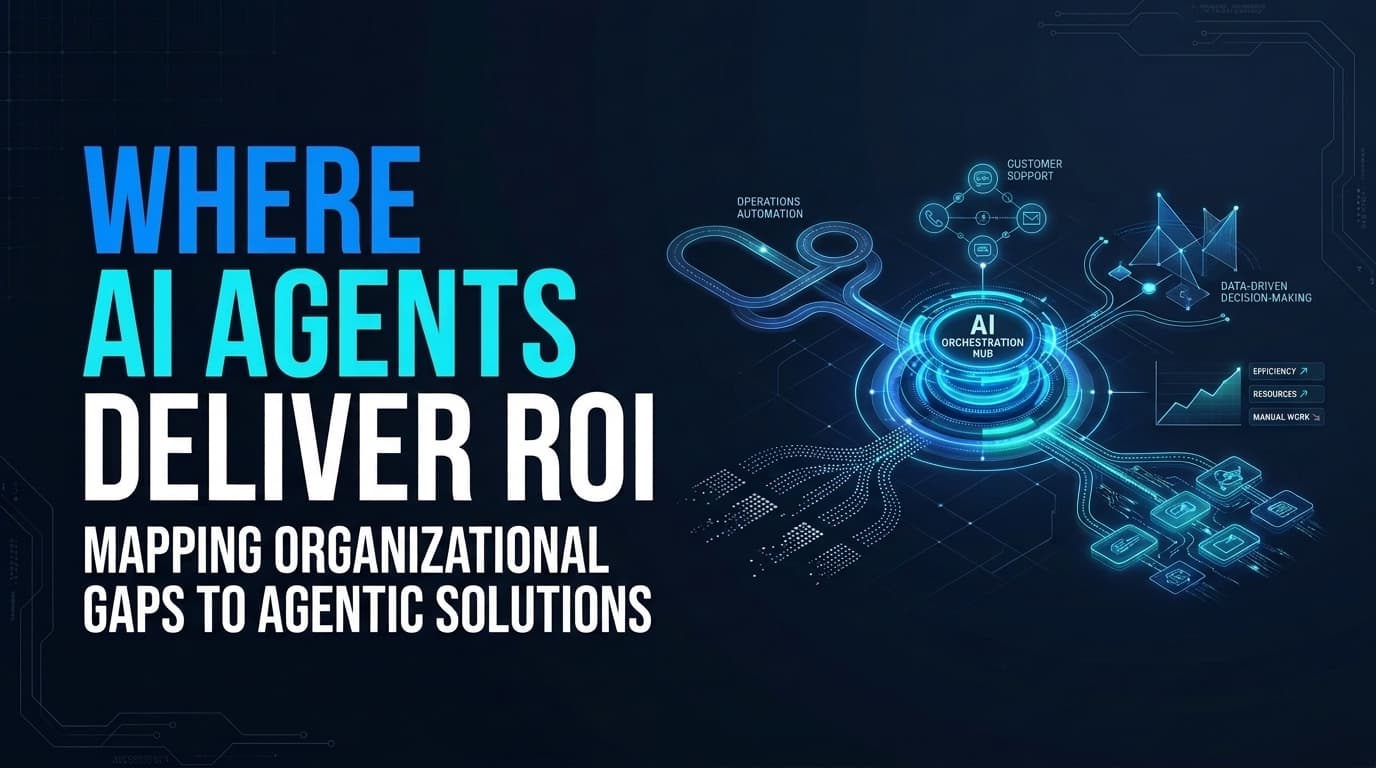
Once these gaps are identified, the next step is mapping them to specific agentic AI capabilities. AI agents are not just chatbots; they are autonomous systems capable of executing multi-step tasks with minimal human intervention.
Automation of repetitive, rule-based tasks: If a team is spending hours every week manually validating data formats or generating standard reports, an AI agent can handle these deterministic workflows. By integrating directly with APIs, the agent can read, validate, and write data across systems without human intervention, effectively closing the manual handoff gap.
Decision support via Retrieval-Augmented Generation (RAG): Instead of forcing all data into a single database, a RAG agent can query existing knowledge bases, documentation, and databases in real time. When a user asks a question, the agent retrieves the most relevant context from across the fragmented enterprise systems and generates a coherent, accurate answer. This bridges the gap between isolated data silos and the people who need that information to make decisions.
Dynamic workflow orchestration and adaptation: Traditional automation tools follow rigid, pre-programmed paths. Agentic AI, however, can adapt to changing conditions. If an inventory check reveals a stockout, an agent can dynamically reroute an order, notify the procurement team, and update the customer's expected delivery date without needing a pre-written script for every possible scenario.
Voice-driven interaction for hands-free operation: This addresses gaps in environments where screen access is limited, such as warehouses, manufacturing floors, or field service. Agents that can process natural language voice commands allow workers to query systems, log issues, or update inventory while keeping their hands and eyes on their physical tasks.
Quantifying ROI of Agentic Solutions
To justify the investment in agentic AI, technical leaders must establish clear metrics for ROI. The value of these agents can be quantified across several operational dimensions.
Reduction in labor hours and operational costs: By offloading tedious, repetitive tasks to agents, employees can focus on higher-value strategic work. This doesn't necessarily mean headcount reduction; rather, it is a reallocation of human capital toward areas that drive growth and customer satisfaction.
Improved accuracy and error reduction: Manual data entry and rule-based processing are prone to human error, which can lead to costly downstream corrections, compliance penalties, or customer churn. AI agents execute tasks with near-perfect consistency, drastically reducing error rates and the operational overhead associated with fixing those errors.
Accelerated cycle times for key processes: Whether it is onboarding a new vendor, processing a customer support ticket, or executing a financial reconciliation, the time from initiation to completion shrinks significantly when automated agents handle the intermediate steps. Faster cycle times improve cash flow, enhance customer satisfaction, and increase overall throughput.
Scalable impact across multiple use cases: Once an agent is successfully deployed for a single use case, the underlying infrastructure and orchestration patterns can be extended to dozens of other processes across the organization, multiplying the initial investment's return over time.
Diagnostic Framework Overview
At Armor Tech, we utilize a structured diagnostic framework to help organizations identify automation opportunities and prioritize their agentic AI initiatives. Without a clear methodology, teams often fall into the trap of building shiny prototypes that fail to solve actual business problems.
Checklist for identifying automation opportunities: We audit existing workflows, mapping out every data input, decision point, and manual handoff. This audit helps pinpoint exactly where agents can inject the most value, whether it is in data ingestion, customer interaction, or backend orchestration. You can explore our detailed methodology and tools on our product page or learn how we apply it through our consulting services.
Prioritization matrix for use-case selection: Not all gaps are equal. We evaluate potential use cases based on factors such as the volume of transactions, the complexity of the manual process, the potential for error reduction, and the ease of integration with existing systems. This matrix ensures that the organization tackles high-impact, achievable projects first, building momentum and proving ROI before scaling.
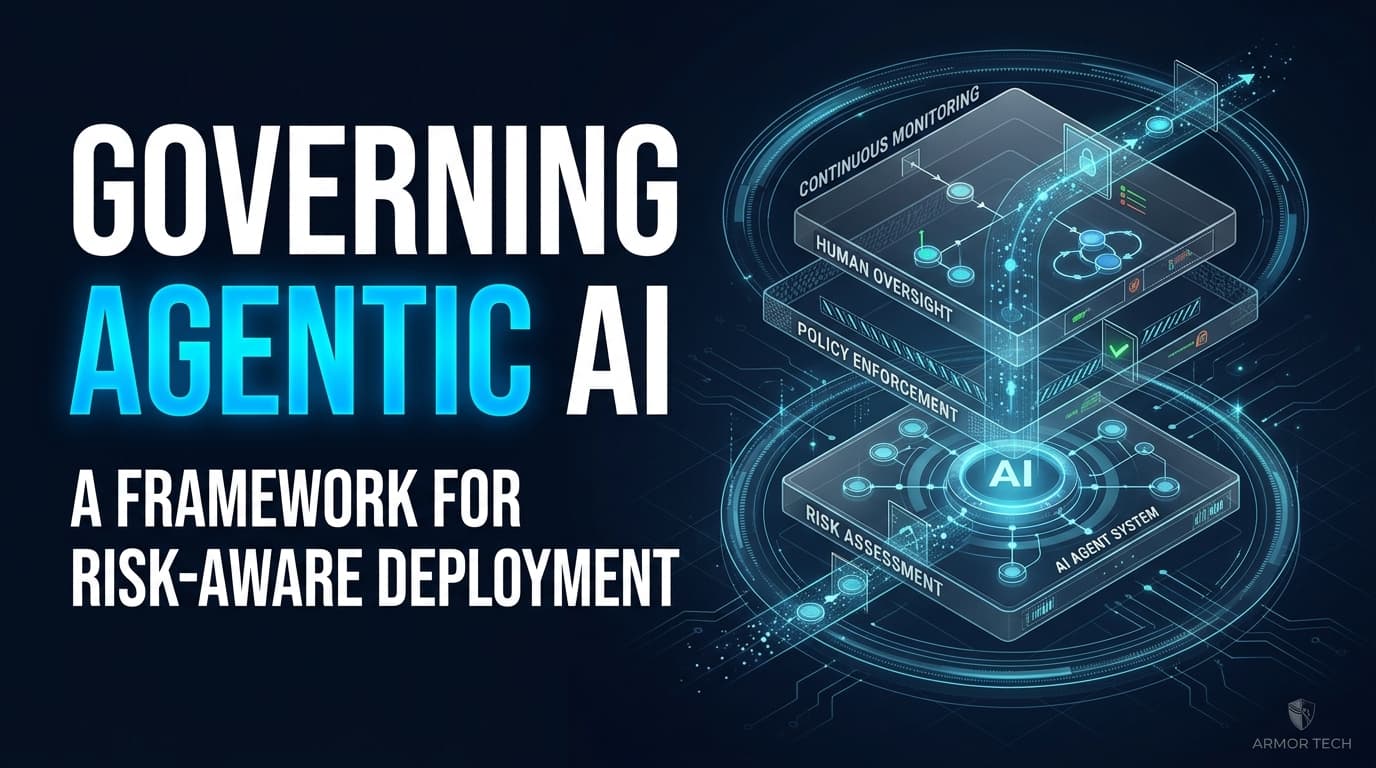
Roadmap from pilot to enterprise-scale deployment: A successful pilot in a single department is not enough to transform an organization. The roadmap outlines the technical, operational, and governance steps required to scale agentic AI across the entire enterprise, ensuring that agents remain secure, compliant, and aligned with business objectives.
Implementation Considerations
Deploying agentic AI successfully requires more than just writing code; it demands careful attention to integration, human factors, and continuous oversight.
Integration with existing SaaS and legacy systems: Enterprises rely on a sprawling mix of tools, many of which lack modern APIs or have highly customized data schemas. Agents must be built with strong integration layers, utilizing middleware, event-driven architectures, or direct database connectors where necessary, to interact effectively with these environments.
Change management and user training: If employees fear that agents are there to replace them, or if they do not understand how to interact with the new systems, adoption will stall. Technical leaders must communicate the purpose of agentic AI as a tool for augmenting human capabilities, not replacing them. Hands-on training and clear documentation help users understand how to collaborate effectively with autonomous agents.
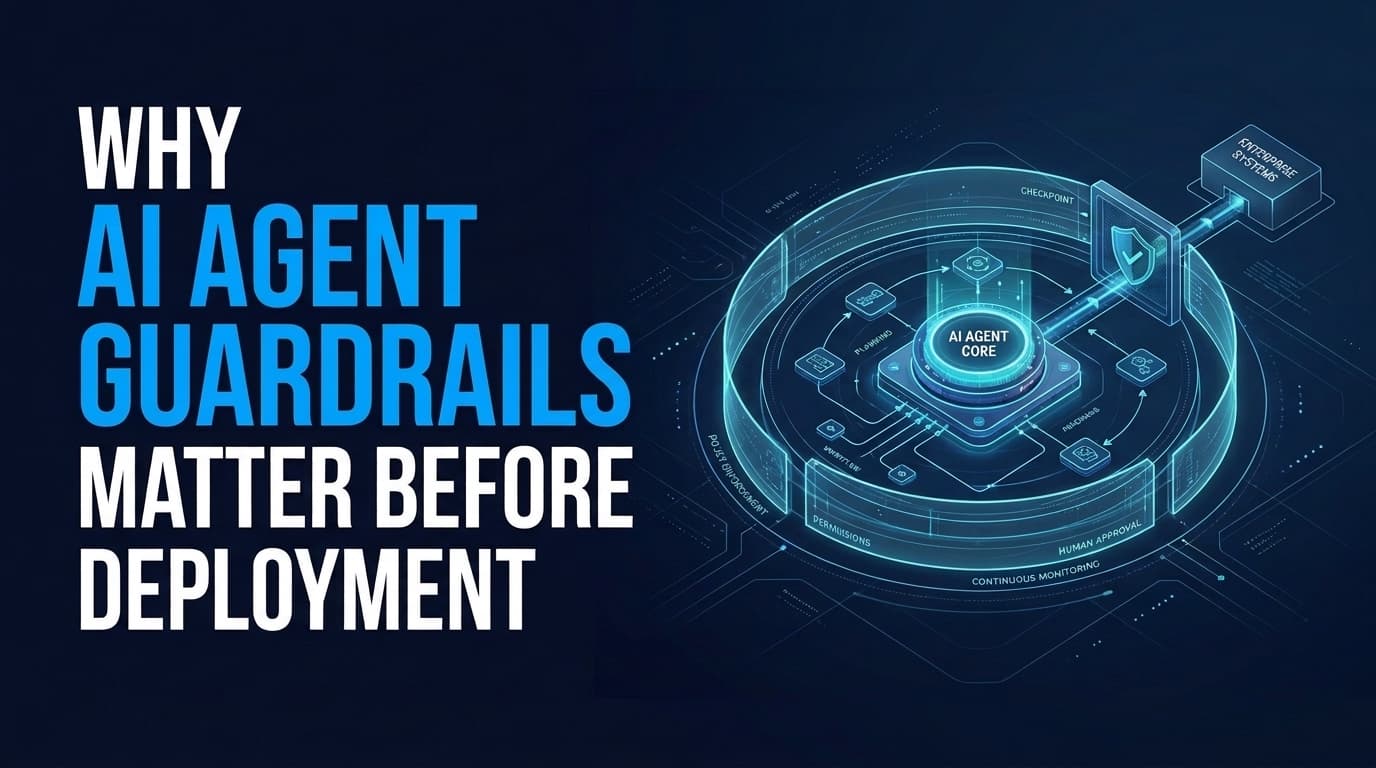
Monitoring, feedback loops, and continuous improvement: Agents operate in dynamic environments, and their performance can drift over time as business rules change or data patterns shift. Implementing real-time monitoring, logging, and automated feedback loops allows teams to detect anomalies, retrain models, and refine agent behaviors, ensuring that the system remains reliable and valuable.
Future Trends and Strategic Benefits
Looking ahead, the capabilities of agentic AI will continue to expand, offering even greater strategic value to organizations that invest early.
Increasing autonomy of AI agents in complex environments: Future agents will not just execute pre-defined tasks; they will plan, reason, and adapt to novel situations in real time, handling complex supply chain disruptions or dynamic pricing strategies with minimal human input.
Enhanced RAG and knowledge retrieval for context awareness: As vector databases and retrieval models improve, agents will gain a deeper, more nuanced understanding of enterprise context. They will be able to synthesize information across decades of archived documents, legal filings, and operational logs to provide highly sophisticated decision support.
Broader industry applicability beyond core business functions: We are seeing innovative applications in regulatory compliance, where agents automatically monitor transactions for anomalies, and in product development, where agents coordinate between design, engineering, and testing teams to accelerate release cycles. Organizations that build the foundational infrastructure today will be well-positioned to leverage these emerging capabilities as they mature.
How Armor Tech Can Help
Armor Tech can help organizations identify high-value opportunities for AI agent implementation by evaluating existing workflows, operational bottlenecks, repetitive tasks, and gaps between business systems. Rather than introducing automation without a clear purpose, Armor Tech focuses on matching agentic AI capabilities with specific organizational challenges. This can include developing AI agents for customer support, lead qualification, internal operations, data processing, workflow coordination, and business reporting. Armor Tech can also integrate agents with existing CRM platforms, APIs, databases, and enterprise applications to reduce manual effort and improve coordination across departments. To measure actual business value, organizations can establish baseline performance metrics and track indicators such as processing time, operating costs, task completion rates, productivity, and customer response times. Through careful implementation, monitoring, and continuous optimization, Armor Tech helps businesses build AI-powered solutions focused on measurable operational improvements and sustainable return on investment.
Frequently Asked Questions
What are the most common business process gaps that AI agents can address?
AI agents are particularly effective at addressing gaps such as manual data handoffs between disconnected systems, fragmented data across departments, inconsistent or undocumented standard operating procedures, and a lack of real-time visibility into operational workflows. By automating repetitive tasks and orchestrating dynamic workflows, agents directly target these friction points to improve overall efficiency.
How do we measure the ROI of implementing agentic AI solutions?
You can measure the ROI of agentic AI by tracking reductions in manual labor hours, decreases in operational error rates, and the acceleration of business cycle times. Additionally, the scalability of agent architectures allows you to expand solutions across multiple departments, multiplying the initial investment's impact over time.
How does Armor Tech help technical leaders plan their agentic AI strategy?
Armor Tech provides a diagnostic framework that audits your existing workflows to identify automation opportunities, uses a prioritization matrix to select high-impact use cases, and establishes a clear roadmap for scaling from initial pilots to enterprise-wide deployment, ensuring that your AI investments deliver concrete, measurable results.
Ready to map your gaps?
Identifying where your organization loses time is the first step toward reclaiming it. By aligning specific operational friction points with targeted AI agent use cases, your team can build a business case grounded in operational reality rather than theoretical hype. We are available to discuss your current workflow challenges and help you evaluate which agentic solutions make sense for your stack.