The Strategic Split: Walmart vs Amazon
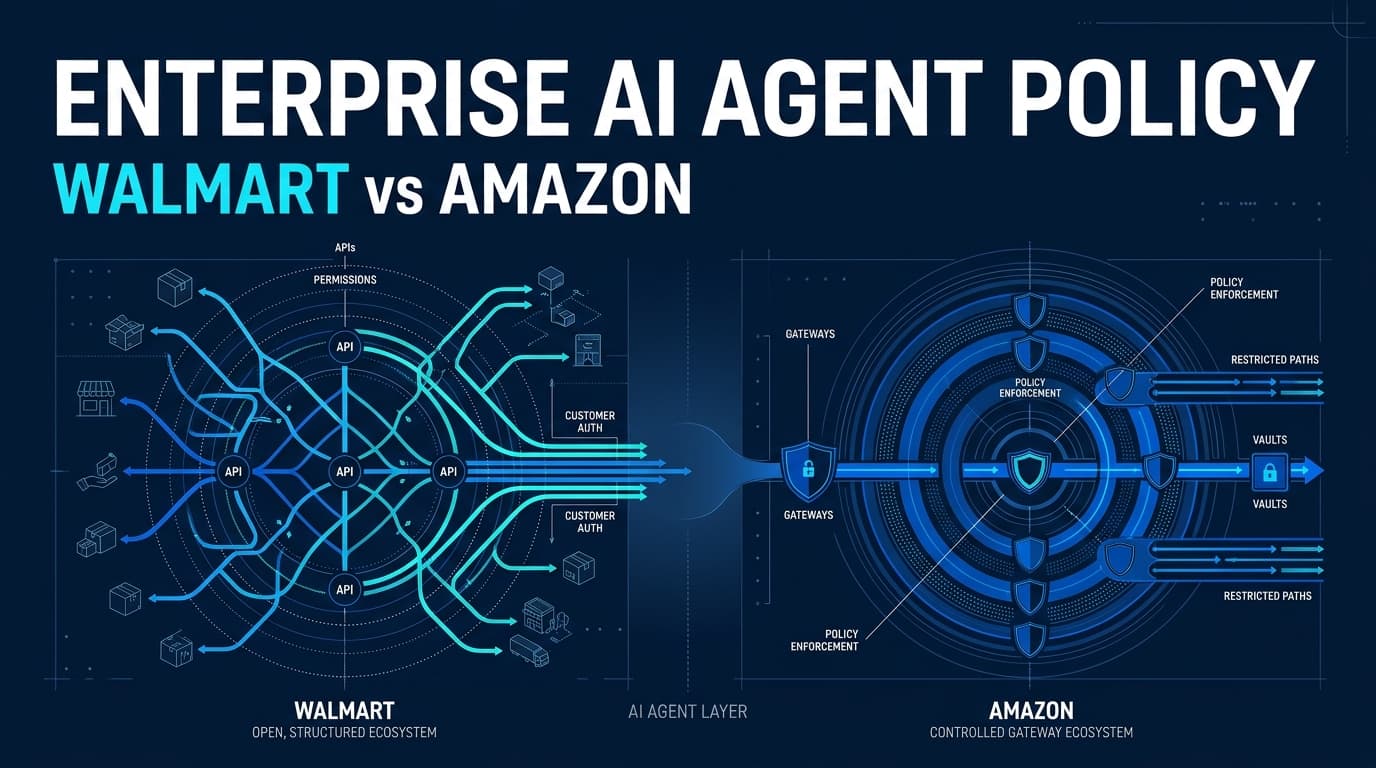
The retail landscape is witnessing a pivotal divergence in how major players approach AI agents. Walmart has taken a proactive stance, launching its Agent Gateway to actively welcome AI agents into its commerce ecosystem. In stark contrast, Amazon has implemented strict barriers, blocking AI agents from making purchases on its platform. This strategic split reflects differing visions for the future of AI-driven commerce, with Walmart positioning itself as an innovator in agentic interactions and Amazon prioritizing control over its customer experience.
Walmart’s move is not isolated. The broader industry shows a trend of caution, with travel and booking sites also locking out AI agents to date. However, Walmart’s willingness to integrate agents marks a significant departure from competitors like Amazon, which began blocking AI agents on its site as early as September 2026. This contrast sets up a competitive landscape where agent-friendly policies could define market leadership in the coming years.
What Is Walmart's Agent Gateway?
Walmart’s Agent Gateway represents a foundational shift in how retailers engage with AI agents. Built on the Model Context Protocol (MCP), it serves as a server that allows approved agents to connect with Walmart’s systems. MCP, originally developed by Anthropic, enables AI agents to interface with external tools and data sources, and Walmart adapts this protocol to facilitate agent-driven shopping experiences.
The gateway allows agents to search Walmart’s inventory and execute purchases on behalf of users without requiring direct access to personal or purchase history data. Walmart emphasizes that agents can perform tasks like identifying a customer’s preferred brands or finding everyday items through agent interactions. Partnerships with leading AI platforms—such as Meta’s Muse, ChatGPT, and Gemini—demonstrate Walmart’s commitment to integrating with popular AI tools, positioning the company at the forefront of agentic commerce.
Agent Profiles and User Control
To navigate the complexities of agent-user interactions, Walmart is introducing Agent Profiles, scheduled to roll out next month. These profiles function as separate identities for each AI agent a user employs, isolating agent-initiated purchases from direct consumer transactions. This structure mirrors traditional financial systems where authorized users have distinct transaction histories, but applied to the digital commerce realm.
Users retain granular control over their agents’ behavior. Through their Walmart account, customers can set spending limits or require approval for each transaction. These controls resemble credit card authorized users, where transactions are visible but subject to predefined parameters. The ability to delete an Agent Profile at any time further reinforces user autonomy, ensuring individuals can manage exposure to agent-driven activities.
Notably, Agent Profiles are accessible to all Walmart customers, regardless of Walmart+ membership, democratizing access to agentic shopping. To activate an Agent Profile, users authorize and link it to their account the first time they engage with a specific agent, establishing a transparent framework for agent behavior.
Terms of Service for AI Agents
Walmart’s approach extends beyond technical infrastructure to legal and governance frameworks, offering clarity through its terms of service for AI agents. These rules enforce strict boundaries on agent behavior, ensuring alignment with user intent. Agents cannot exceed their designated roles, access payment information directly, or request data beyond what is necessary for their specific tasks.
Crucially, Walmart’s returns policy applies even when an agent’s actions lead to unwanted purchases. This customer-friendly approach reduces the risk of experimentation, encouraging users to embrace AI agents without fear of being stuck with incompatible products. Walmart emphasizes that non-compliant agents will face immediate blocking, ensuring adherence to the platform’s standards.
The terms also highlight Walmart’s commitment to data privacy. Agents are restricted from sharing user data across systems, maintaining consistency with standard privacy regulations. This careful balance of empowerment and restriction underscores Walmart’s strategy to foster trust in agentic commerce.
Implications for Enterprise AI Policy
For enterprise leaders, Walmart’s approach offers a blueprint for building competitive AI strategies. By enabling agent access through protocols like MCP, businesses can drive new revenue streams while fostering innovation. IT decision-makers should evaluate how open protocols enhance integration capabilities and reduce friction in agent deployments.
However, success hinges on robust governance. Walmart’s use of Agent Profiles and clear terms illustrates how organizations can mitigate consumer risk while empowering users. Enterprises that adopt similar frameworks may gain an edge in consumer trust and agent adoption. Conversely, firms that follow Amazon’s blocking approach could stifle agentic interactions, potentially lagging behind competitors who prioritize transparency and control.
The competitive landscape will likely separate early adopters who design agent-friendly infrastructures from those who impose restrictive policies. Companies that view agents as extensions of their user ecosystems, rather than threats, may define the next phase of digital commerce.
Building an Agent-Friendly Enterprise Environment
Organizations seeking to follow Walmart’s lead must address both technical and policy challenges. Adopting open standards like MCP provides flexibility in connecting agents to internal systems, enabling workflows that span inventory, customer data, and transactions. Integration with popular AI tools—like those in Armor Tech’s services—ensures compatibility with emerging agents and reduces vendor lock-in.
Implementing authentication and spending controls is equally critical. Enterprises should establish agent identities with clear role definitions, akin to Agent Profiles, and implement safeguards against unauthorized actions. Spending limits, transaction approvals, and audit trails can mirror financial controls, minimizing risk while enabling agent autonomy.
Finally, enterprises must codify terms of service that clarify agent responsibilities and user rights. Policies should address returns, data access, and compliance, ensuring alignment with regulatory standards. By combining open protocols with structured governance, organizations can create environments where AI agents thrive without compromising user trust.
How Armor Tech Can Help
Armor Tech helps organizations develop secure, governed AI agent systems with clearly defined permissions, identity verification, human approval workflows, and comprehensive audit trails. From evaluating third-party AI tools to integrating agents with enterprise applications, we help businesses establish practical policies for data privacy, access control, and operational accountability. Our approach enables organizations to adopt agentic AI while keeping autonomy aligned with business objectives, security requirements, and regulatory obligations.
Frequently Asked Questions
Can AI agents make purchases on Amazon?
Amazon has blocked AI agents from initiating purchases on its platform, citing concerns over fraud, policy violations, and user experience. Unlike Walmart, Amazon prioritizes control over its checkout processes, requiring direct consumer action for transactions. This stance reflects a broader strategy to maintain oversight of its e-commerce ecosystem.
How do Walmart’s Agent Profiles differ from traditional user accounts?
Agent Profiles act as distinct identities for each AI agent, separate from a user’s primary account. They feature isolated transaction histories, enabling users to monitor agent activity. Controls like spending limits or transaction approvals function similarly to credit card authorized users, ensuring users retain oversight without sharing personal credentials with agents.
What technical standards support Walmart’s Agent Gateway?
Walmart’s Agent Gateway is built on the Model Context Protocol (MCP), an open framework developed by Anthropic. MCP allows AI agents to interface with external tools and data sources, and Walmart leverages it to let agents search inventory and process orders. This standard ensures compatibility with leading AI platforms like ChatGPT, Gemini, and Meta’s Muse.
For organizations navigating the rise of AI agents, the choice between openness and restriction will shape user experiences and competitive positioning. Walmart’s proactive stance suggests a future where agents enhance commerce, provided enterprises prioritize governance and integration. Explore Armor Tech’s solutions to design policies that balance innovation with accountability.