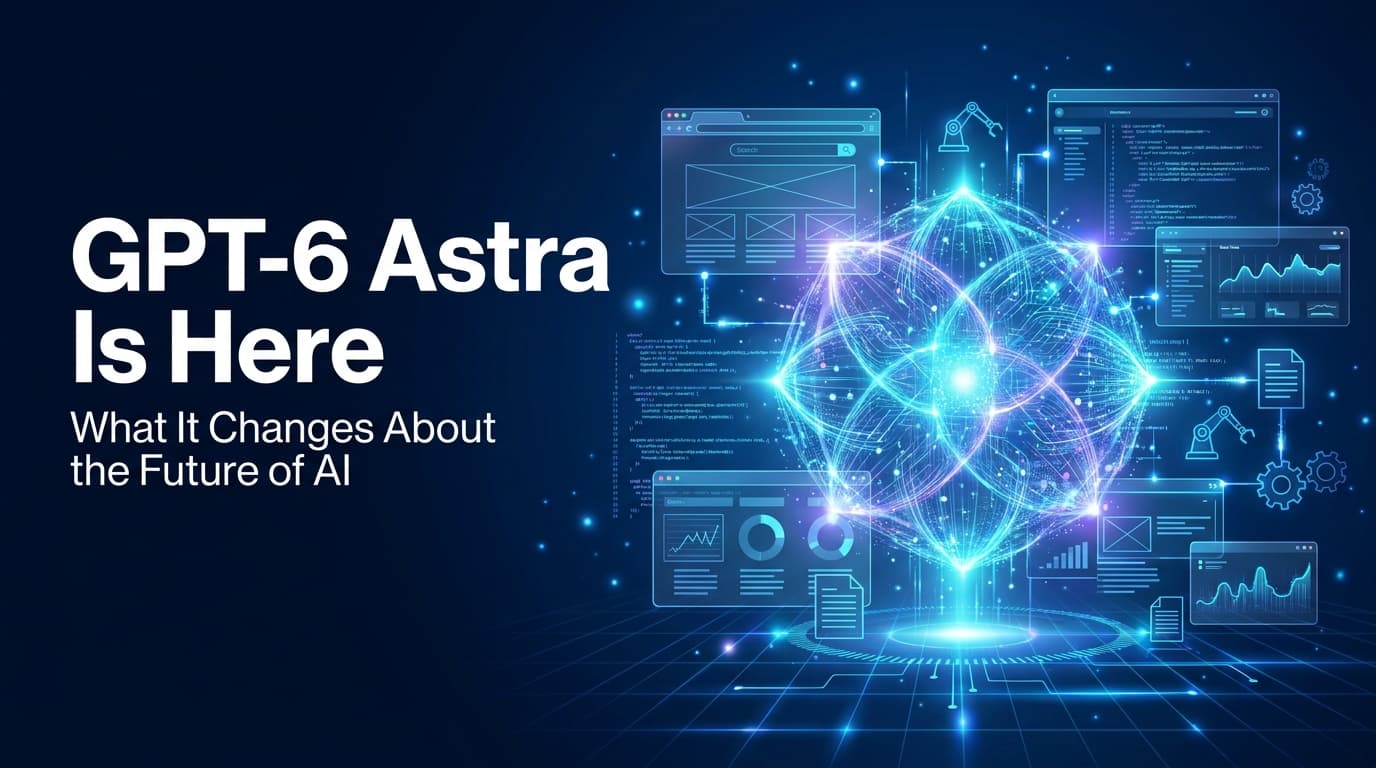
The next phase of AI may not be defined by how well a model answers a question, but by how much work it can complete after you ask. With the launch of GPT-6 Astra on September 3, 2026, OpenAI is pushing its frontier models further in that direction. Astra combines advanced reasoning with computer use, browsing, coding, research, and professional workflows, allowing it to move beyond generating responses toward carrying out multi-step tasks across software and digital environments. OpenAI reports state-of-the-art performance across several demanding evaluations and describes Astra as its most capable and aligned model yet. The bigger story, however, is what this shift could mean for the future of AI: a transition from systems that primarily assist people to AI agents that can increasingly execute meaningful work.
What Is GPT-6 Astra?
GPT-6 Astra is OpenAI’s latest frontier model, introduced on September 3, 2026, and described by OpenAI as its most capable model yet. Rather than being designed only for generating text or answering questions, Astra is built for complex, end-to-end work that combines reasoning with coding, computer use, research, browsing, and document creation. OpenAI’s developer documentation identifies GPT-6 Astra as its flagship model for the hardest workflows, with support for advanced reasoning and tools such as web search, file search, functions, and computer use(Source:Open AI Official Docs).
In simple terms, GPT-6 Astra can be viewed as a move from AI that primarily responds to AI that can increasingly participate in the execution of work. That distinction is what makes the model important not just as another generation of a language model, but as part of the larger transition toward more capable AI agents and automated digital workflows.
What's Actually Different About GPT-6 Astra?
GPT-6 Astra is not simply about generating better answers. Its biggest difference is its ability to combine advanced reasoning, computer use, coding, research, and tool interaction to handle complex tasks from start to finish. OpenAI describes Astra as a model built for demanding workflows across software, research, cybersecurity, and professional work.
One of its key advances is computer use, allowing AI to interact with digital interfaces and software rather than relying entirely on human execution. Astra can also work through multi-step tasks, create documents and presentations, use external tools, and adapt when requirements change.
With a 1.05-million-token context window and configurable reasoning levels, Astra gives developers more capacity and control for complex workflows. Together, these capabilities point toward an important shift in AI: from systems that primarily generate responses to systems that can increasingly reason, use tools, and perform real work(Source:Open AI Official Docs).
The Biggest Change: From Answers to Actions
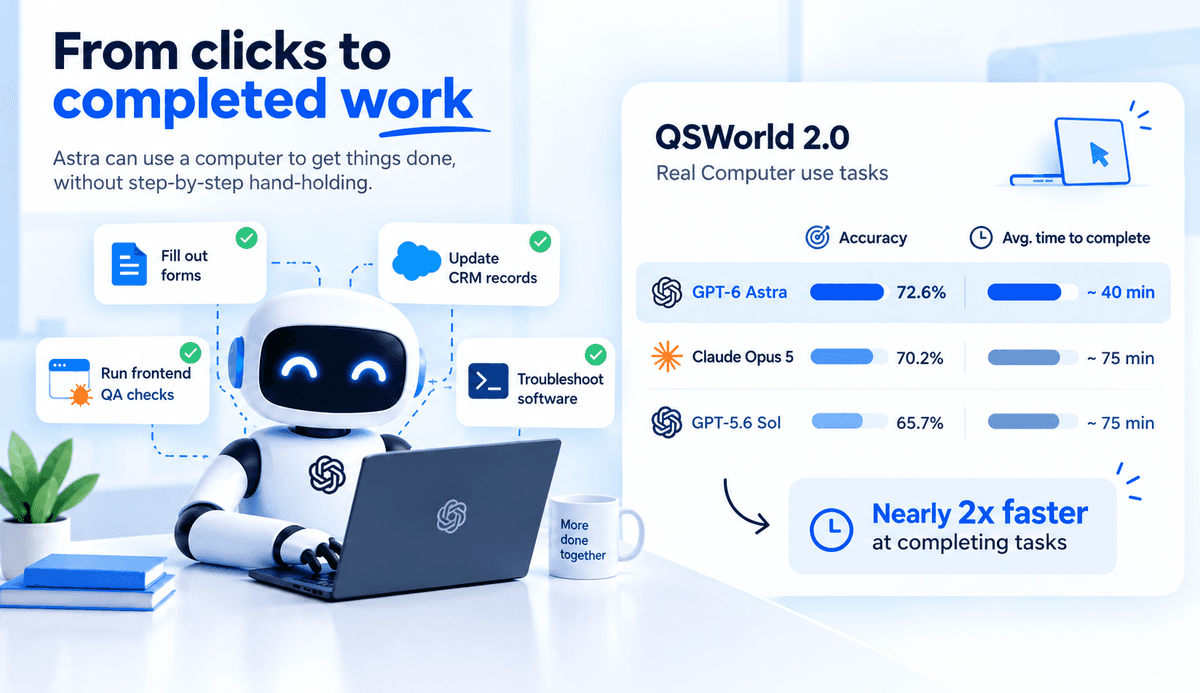
Image Source:Analytics Vidhya
The real shift with GPT-6 Astra is simple: AI is moving from answering questions to getting things done. Astra can combine reasoning with computer use, browsing, coding, and tools to work through multi-step tasks from conducting research and updating software to creating documents and working across digital environments.
This changes how we think about AI. Instead of asking, “What should I do?”, users can increasingly ask, “Can you do this for me?” That move from answers to actions is one of the clearest steps toward more capable agentic AI and automated workflows.
GPT-6 Astra for Software Development
GPT-6 Astra is designed to take software development beyond simple code generation. OpenAI describes it as its strongest model for software engineering to date, with the ability to understand codebases, work through complex engineering tasks, use computer environments, and require fewer iterations to reach a usable result(Source:Open AI Official Docs).
Some of the key improvements include:
Codebase understanding: Better at working with large and complex software projects.
Agentic coding: Can work through implementation, debugging, testing, and iteration rather than stopping after generating code.
Computer interaction: Can install and test software, navigate interfaces, and troubleshoot problems on screen.
Frontend development: Can build websites and perform quality checks to verify that features work as expected.
Fewer development iterations: OpenAI reports that early testers saw code requiring less correction before reaching production quality.
GPT-6 Astra Bench Marks
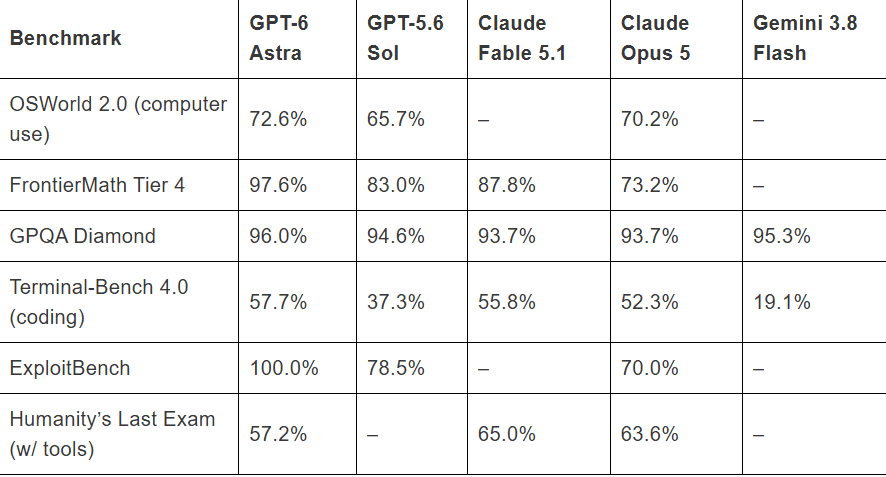
What the Results Actually Tell Us
Computer use stands out: Astra shows a strong advantage on OSWorld 2.0, outperforming Claude Opus 5 while completing tasks in less time.
Coding has improved: Astra makes a clear jump over its predecessor, although its lead over Claude Fable 5.1 on Terminal-Bench 4.0 is relatively small.
It isn't the leader everywhere: On Humanity’s Last Exam with tools, Astra trails both Claude Fable 5.1 and Claude Opus 5.
Benchmarks need context: Astra’s reported 99.9% ARC-AGI-3 score comes from a costly, stateful evaluation setup. Independent ARC Prize Foundation testing found considerably lower results with standard stateless API calls, showing why headline benchmark numbers should be interpreted carefully(Source:Analytics Vidhya).
Conclusion
GPT-6 Astra is more than another upgrade in AI models. Its real significance lies in how it brings reasoning, coding, computer use, research, and automation together in a single system. As AI becomes better at understanding goals and completing multi-step tasks, the role of AI is gradually shifting from simply providing answers to actively helping with the work itself. This could have a major impact on software development, business operations, research, and everyday digital workflows. Astra does not mean every task can now be fully automated, but it does show where the industry is heading: toward AI systems that can work alongside people, use the tools they already rely on, and take on increasingly complex responsibilities.
How Armor Tech Can Help
As AI becomes more capable of handling real tasks, businesses need practical systems that can put these capabilities to work. At Armor Tech, we help businesses build AI agents, RAG systems, MCP integrations, and intelligent automations that connect AI with existing workflows and tools. Our goal is simple: turn advanced AI technology into solutions that save time, improve efficiency, and create measurable business value.
References
1. Source:Open AI Official Docs
https://openai.com/index/gpt-6-astra/
2. Source:Analytics Vidhya
https://www.analyticsvidhya.com/blog/2026/09/gpt-6-astra-explained