What Is Meta's Muse?
< p >Meta's Muse represents a significant entry into the personal AI agent market, positioning itself as a conversational assistant that operates continuously across devices while executing complex tasks. Built on Meta's agentic AI foundation, Muse goes beyond simple chat interfaces by planning multi-step operations and maintaining ongoing goal tracking throughout the user experience. < p >The platform is accessible through mobile, Mac, and WhatsApp, offering users a unified interface where they can delegate tasks, receive proactive suggestions, and watch their objectives progress in the background. This continuous operation means Muse remains active even when the primary application is not open, handling monitoring, scheduling, and execution autonomously.
Security, Privacy, and User Control
< p >Security and privacy form the cornerstone of Muse's design philosophy, with explicit safeguards built into every layer of the agent's operation. Users retain direct control over their credentials through a secure credential store that the agent cannot access, and one-time card numbers are generated during eligible purchases to protect financial data from exposure. < p >The system enforces strict approval workflows for critical actions such as sending emails, making purchases, and sharing information with connected applications. An audit trail captures every action taken by the agent, providing transparency and accountability while preventing unauthorized behavior.
Extensibility: Connectors and On-the-Fly Tool Creation
< p >Muse excels in integrations, connecting directly to common productivity tools including email, calendars, and social platforms like Instagram. These native connectors reduce friction by enabling seamless task delegation without requiring custom development for each workflow. < p >Beyond existing integrations, Muse supports on-the-fly tool creation when standard connectors fall short. The platform allows users to define custom tools tailored to specific needs, then execute those tools within the agent's workflow. This flexibility makes Muse adaptable to unique organizational processes that generic solutions might miss.
Business Model and Target Market
< p >Muse offers a freemium structure with a usage-based cap on its free tier, encouraging adoption while reserving higher limits for paying subscribers. A dedicated "Muse for Small Business" variant expands the offering with specialized skills and additional connectors designed for entrepreneurs managing daily operational tasks. < p >The product is available across major platforms—iOS, Android, macOS, and WhatsApp—ensuring broad accessibility. Enterprise-focused organizations can evaluate the "Muse for Small Business" package alongside broader agentic AI strategies to determine alignment with their specific needs.
Build vs. Buy: Evaluating Muse Against a Custom Agent
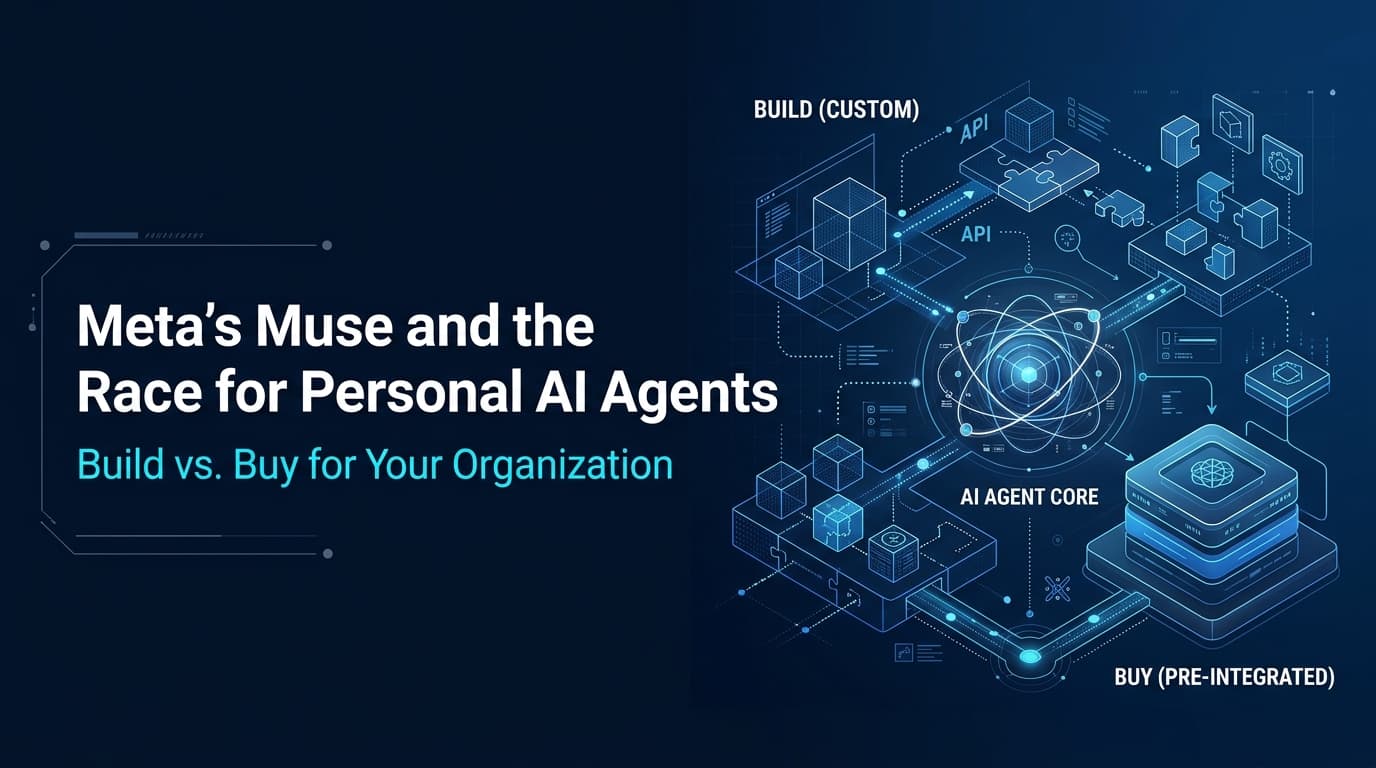
< p >When deciding whether to adopt Muse or develop a custom AI agent internally, founders should weigh several dimensions including time-to-value, data ownership, integration depth, total cost of ownership, and maintenance responsibilities. Muse delivers rapid deployment with pre-built functionality, whereas a custom agent requires engineering investment but offers full control over architecture and data sovereignty. < p >Control over data becomes a decisive factor for enterprises subject to strict compliance regimes. While Muse provides strong encryption and user oversight mechanisms, organizations may prefer building in-house to maintain absolute data residency and avoid third-party dependencies entirely. < p >Integration breadth differs markedly between the two approaches. Muse leverages a grid of pre-connected applications and supports on-demand tool creation, reducing the need for bespoke API development. In contrast, a custom-built agent must be constructed from scratch to achieve comparable coverage, potentially extending timelines significantly.
A Decision Framework for Founders
< p >Adopting a structured evaluation process helps founders align their choice with strategic priorities. Begin by defining the specific use cases and required capabilities of the agent, then assess data sensitivity and compliance obligations that may influence architectural decisions. < p >Next, evaluate the integration landscape to understand which connectors are already supported and which gaps require custom development. Consider both the immediate value of pre-built tools and the long-term benefits of a fully customized solution. < p >Budget and timeline constraints further shape the decision. A pilot implementation with Muse can validate fit before committing resources to a proprietary build, while a custom agent project demands upfront engineering capacity and ongoing maintenance commitments.
How Armor Tech Can Help
At Armor Tech, we help organizations determine the right approach to personal AI agents by evaluating their business requirements, existing infrastructure, security needs, and long-term objectives. Our team can design custom AI agent workflows, integrate suitable third-party platforms with existing business systems, and implement retrieval-augmented generation (RAG), API integrations, access controls, and monitoring where appropriate. By comparing development effort, licensing, maintenance, scalability, and governance requirements, we help businesses make informed build-versus-buy decisions rather than adopting technology simply because it is new. Whether your organization needs a tailored AI assistant, connected productivity workflows, or a hybrid agent architecture, Armor Tech focuses on practical, secure, and maintainable solutions that deliver measurable business value.
Frequently Asked Questions
What can Muse do?
Muse can answer questions, complete tasks, browse the web, make purchases, generate images, create documents, and connect with favorite apps and services via its Connector system. It also sets reminders, tracks goals, monitors personal interests, and operates continuously in the background regardless of app usage.
How does Muse work?
As an agentic AI, Muse receives tasks and automatically selects appropriate built-in skills to accomplish them. It can browse the web, extract information from connected applications, and execute multi-step workflows. Users maintain oversight through permission settings and a complete audit trail of all actions performed by the agent.
Is Muse safe?
Yes. Muse incorporates automated protections, follows agentic AI security standards, and provides user-controlled safeguards against harmful content and unauthorized actions. Conversations remain private and are not shared with Meta's advertising systems, giving users meaningful control over their data.
Does Muse keep working after I close the app?
Absolutely. Once a task is assigned to Muse, it continues operating in the background even when the main application is not open. Whether monitoring weather alerts, managing schedules, or pursuing other defined objectives, the agent maintains its workload independently of user interaction.
What is a personal AI agent enterprise?
A personal AI agent enterprise refers to organizations that deploy and operate autonomous AI assistants focused on individual productivity and life management. These solutions typically combine large language models with tool-use capabilities, enabling continuous assistance across devices and tasks that span communication, organization, and execution.
Explore our products and services
Read more about our approach to agentic AI strategy