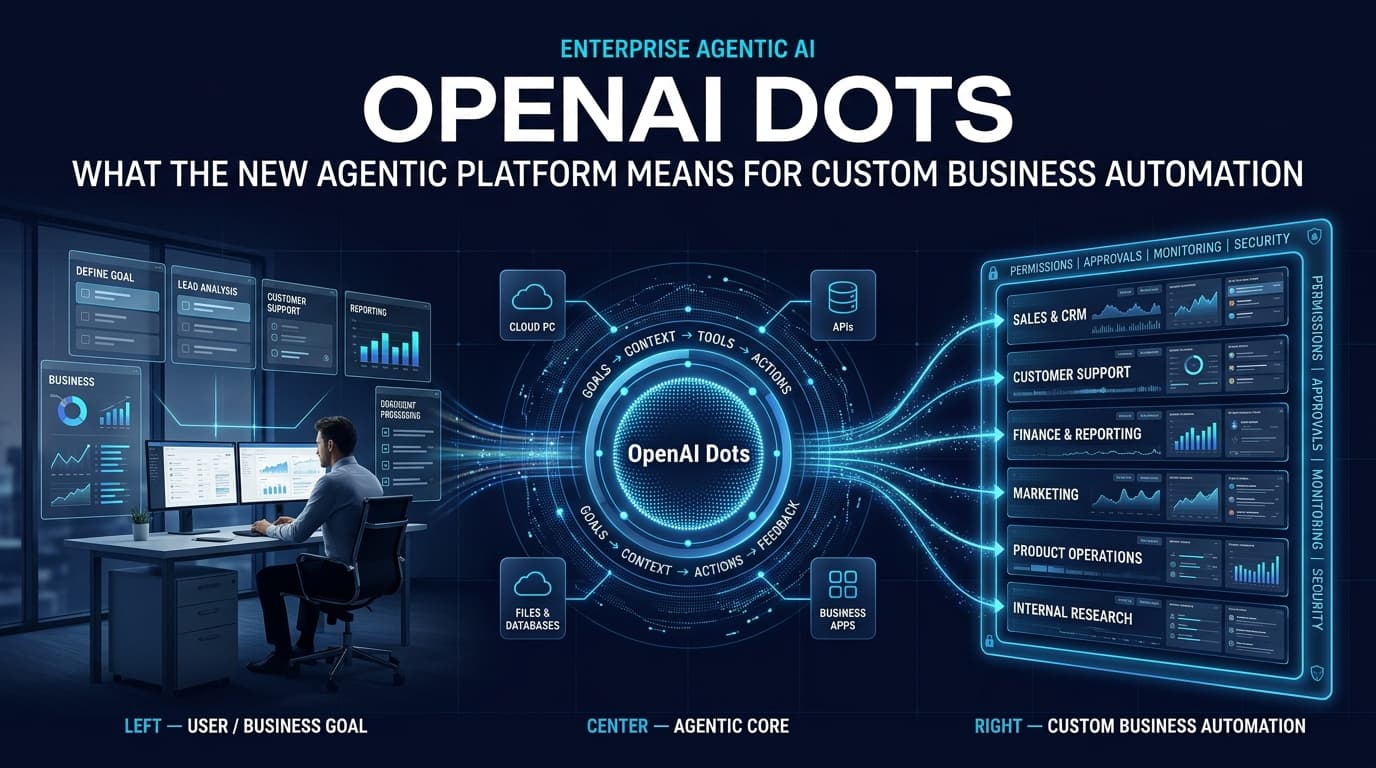
OpenAI's Dots launch marks the most concrete signal yet that the industry is moving past chat interfaces toward persistent, app-connected agents with dedicated cloud compute. The technical specifics remain thin — no public API docs, SDK, or integration details exist as of the October 2026 TechCrunch Disrupt announcement — but the architectural claims (per-agent cloud computers, background goal pursuit, app connectivity) map directly to the build-vs-buy decisions technical leaders face today. Here's what's known, what's missing, and how to evaluate Dots against custom agentic stacks without committing prematurely.
What OpenAI Dots Actually Is — Based on What's Public
The TechCrunch announcement confirms three concrete facts: Dots exist, they have dedicated cloud computers per agent, and OpenAI product lead Alexander Embiricos will discuss them at TechCrunch Disrupt 2026 (October 13–15, Moscone West) in a session titled "What Comes After the Chatbot?" The marketing framing positions Dots as "always-on personal AI agents" that "go beyond answering prompts" to "keep working toward a goal in the background" and "connect to the apps people use every day."
That's the entire public knowledge base. No developer portal, no API reference, no authentication model, no rate limits, no pricing tiers. The product page linked in the announcement (chatgpt.com/features/dots) is a consumer-facing landing page, not technical documentation. For technical leaders, this means every integration assumption — OAuth scopes, webhook support, custom connector frameworks, on-premises data access — is speculative until OpenAI publishes specs.
The Disrupt session may yield more, but event keynotes rarely substitute for API docs. Treat Dots today as a market signal: the largest LLM provider has shipped a product that assumes persistent agent runtimes and app-level integrations as table stakes. Whether Dots becomes a platform layer or remains a closed consumer product depends entirely on what OpenAI releases next.
Capability Gaps That Matter for Business Automation
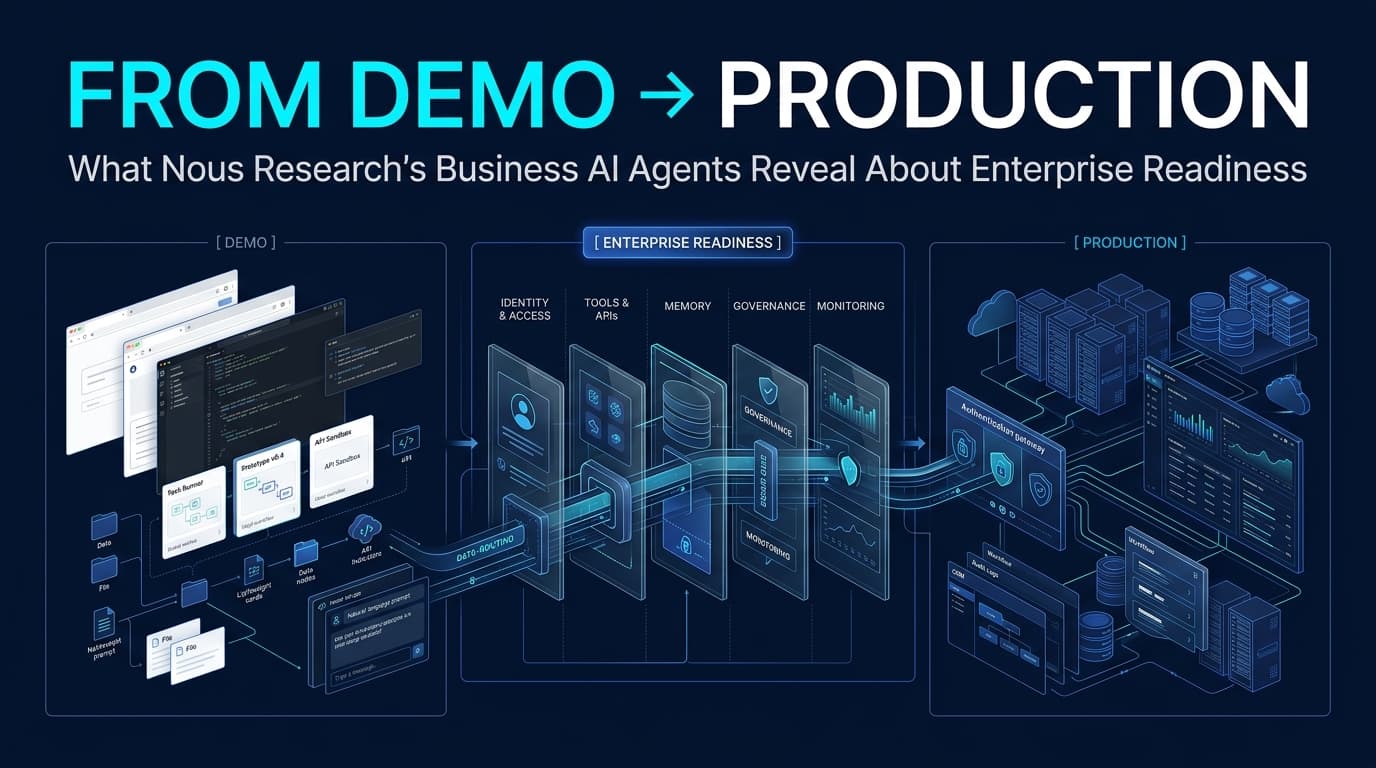
The gap between "connects to apps people use every day" and a production integration surface is where B2B evaluations live or die. Based on the announcement alone, these are the unknowns that determine whether Dots can serve as a platform component:
- Integration surface: Which apps? Via OAuth 2.0, API keys, or proprietary connectors? Are custom connectors supported, or is the integration catalog closed? Webhook ingress/egress for event-driven patterns? On-premises data access via secure tunnels or VPC peering?
- State management: How does a "background goal" survive compute restarts, network partitions, or agent crashes? Checkpointing frequency? Human-in-the-loop escalation paths when an agent hits ambiguity? Durability guarantees for multi-step workflows spanning hours or days?
- Observability: Audit logs of agent decisions and tool calls? Reasoning traces for debugging? Cost attribution per agent run (token usage, compute time, API calls to connected apps)?
- Governance: Role-based access control for who can spawn, monitor, or terminate agents? Policy-as-code for allowed actions (read-only vs. write/execute per integration)? Data egress controls to prevent exfiltration via agent actions?
Without answers, any architecture that treats Dots as a reliable automation primitive is betting on vaporware. The prudent path: prototype target workflows in frameworks where you control these variables (LangGraph, n8n, Make, Temporal) to define requirements before evaluating any managed platform.
Dots vs. Custom Agentic Stacks: Build-vs-Buy Decision Framework
The build-vs-buy calculation for agentic platforms differs from traditional SaaS because the "buy" option (Dots) currently lacks an API, while the "build" option (open-source frameworks) demands orchestration engineering. Structure the decision around four axes:
| Axis | Managed Platform (Dots, if it opens up) | Custom Stack (LangGraph, AutoGen, CrewAI + n8n/Make) |
|---|---|---|
| Time-to-value | Fast if integrations match your stack; zero if they don't | Weeks to months for orchestration layer, but immediate control |
| Vendor lock-in | Proprietary agent runtime, prompt formats, state schema | Portable workflow definitions (YAML, Python, BPMN) |
| Data sovereignty | OpenAI cloud compute — data leaves your boundary | Self-hosted or private cloud; data never leaves your VPC |
| Extensibility ceiling | Closed roadmap; wait for OpenAI to ship connectors | Open-source ecosystem velocity; add any integration today |
If your automation needs map to Dots' eventual integration catalog and you can tolerate OpenAI-cloud data processing, the managed path wins on speed. If you need on-prem data access, custom auth flows, or deterministic audit trails, the custom stack wins on control — and the engineering investment is increasingly commoditized by frameworks like LangGraph and workflow engines like n8n.
Trust, Privacy, and Compliance — The Adoption Blockers
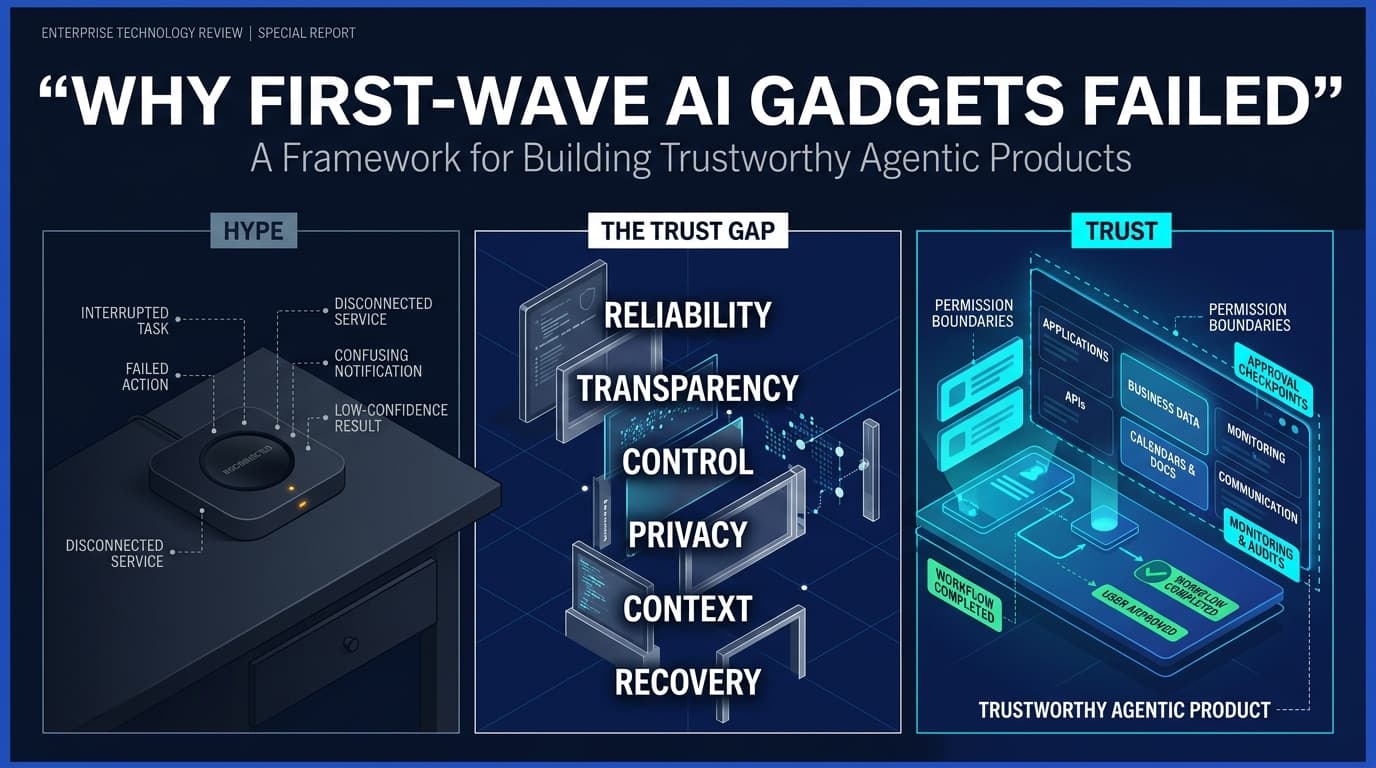
The TechCrunch piece explicitly surfaces the trust problem: "How much control are we actually willing to hand over to an AI agent? What should it be allowed to do without asking? And as these systems learn more about us and gain access to increasingly sensitive information, can companies like OpenAI earn enough trust?"
For regulated industries, these aren't philosophical questions — they're procurement blockers. The current unknowns:
- Data processing agreements: Zero-retention options? Data residency controls? DPA template availability?
- Agent action scopes: Granular permissions per integration (read-only vs. write vs. execute)? Approval gates for irreversible actions (financial transactions, data deletion, external communications)?
- Regulatory fit: SOC 2 Type II, HIPAA BAA, PCI DSS, EU AI Act compliance artifacts? Penetration test summaries? Incident response SLAs with customer notification commitments?
- Incident response: Rollback capability for agent actions? Audit trail immutability? Forensic export for compliance reviews?
Until OpenAI publishes compliance artifacts, Dots cannot be evaluated for financial services, healthcare, or EU-regulated workloads. The mitigation pattern: classify your workflows by data sensitivity, then map which tier (if any) can tolerate OpenAI-cloud processing under your current DPA and risk appetite.
Integration Patterns: Where Dots Fits in a Modern Automation Architecture
Rather than a silver bullet, treat Dots (if it becomes programmable) as one node in a heterogeneous automation fabric. The pattern that works in production today:
- Deterministic choreography: n8n, Make, or Temporal for API-heavy workflows with known steps, retries, and SLAs — invoice processing, user provisioning, data sync.
- Fuzzy reasoning tasks: Agentic layer (Dots, LangGraph, AutoGen) for multi-step research, content generation, decision support, exception handling where the path isn't known upfront.
- Context injection: RAG pipelines feeding curated, permissioned context to agents at runtime — not raw data dumps. RAG pipelines and automation workflows we build follow this pattern: retrieval → ranking → token-budgeted context window → agent action.
- Human gates: Slack/Teams/email approval steps before irreversible agent actions (send email, update CRM, deploy code). The agent proposes; human confirms.
- Unified observability: OpenTelemetry traces spanning workflow engine → agent runtime → LLM calls → external APIs. Centralized logging with correlation IDs so a failed agent action traces back to the triggering workflow.
This composition lets you adopt agentic capabilities incrementally without rewriting your automation backbone. Dots becomes a "reasoning node" you can swap with a self-hosted alternative if compliance or cost demands it.
What to Watch: Signals That Dots Becomes a Platform, Not a Product
Consumer products don't need APIs; platforms do. Track these milestones to know when Dots crosses the threshold:
- Public API/SDK release with authentication (OAuth 2.0, service accounts), rate-limit documentation, and SDKs in Python/TypeScript/Go.
- Enterprise pricing and support tiers — dedicated support, SSO/SCIM, SLA with credits, volume discounts.
- Partner ecosystem — certified integrations for Salesforce, Notion, Jira, GitHub, internal tooling frameworks, with published connector specs.
- Compliance artifacts — SOC 2 Type II report, penetration test summary, DPA template, HIPAA BAA availability, data residency options.
- Developer tooling — local emulator, CI/CD integration, testing framework, prompt/flow versioning, deployment environments (dev/staging/prod).
Each milestone reduces a specific adoption risk. Until at least the first two appear, Dots remains a consumer product with platform aspirations — not a B2B platform component.
Next Steps for Technical Leaders Today
No premature commitments. Low-risk moves while the platform matures:
- Register for the Disrupt session recording (or attend Oct 13–15) and monitor the OpenAI developer blog for Dots API preview announcements.
- Prototype your highest-value use case in LangGraph or n8n this quarter. Define the integration surface, state requirements, and observability needs — then you'll have a requirements document, not a wish list, when evaluating platforms.
- Run a data-classification audit: which workflows process PII, financial data, health data, or IP? Map each to your DPA and regulatory constraints. This tells you which tier (if any) can ever use OpenAI-cloud agents.
- Engage for a scoped architecture review mapping your automation landscape to agentic patterns. Agentic AI systems we build start with this mapping — identifying which workflows benefit from fuzzy reasoning vs. deterministic choreography, and where human gates belong.
Frequently Asked Questions
Does OpenAI Dots have a public API I can integrate with today?
No. As of the October 2026 TechCrunch Disrupt announcement, OpenAI has not published API documentation, SDKs, or a developer portal for Dots. The product page is consumer-facing. Any integration planning should assume no programmatic access until OpenAI releases developer tools.
Can Dots access on-premises databases or internal tools behind a firewall?
Unknown. The announcement states Dots "connect to the apps people use every day" but does not specify authentication models, VPC peering, secure tunnels, or custom connector frameworks. Assume cloud-only SaaS integrations until OpenAI documents on-prem access patterns.
What compliance certifications does Dots have for enterprise use?
None publicly documented. The TechCrunch piece raises trust and privacy questions explicitly but provides no compliance artifacts (SOC 2, HIPAA, PCI, EU AI Act). Treat Dots as non-compliant for regulated workloads until OpenAI publishes audit reports and DPAs.
Dots signals where the market is heading — persistent, app-connected agents with dedicated compute — but the technical substance required for B2B adoption hasn't shipped. The teams that win the next 18 months aren't waiting for platform maturity; they're building the integration patterns, observability foundations, and governance frameworks that make any agentic layer (managed or custom) production-ready. When the APIs arrive, you'll be ready to evaluate on your terms.